)
)
How Panama Became a Global Hub of Migration, Culture & Remittances
)
)
Most people have heard of the Panama Canal. Others have perhaps seen pictures of its idyllic beaches and tropical islands, perfect for a sunny vacation.
But Panama is so much more than that. A little bit of digging reveals a long, rich, and layered history. Throughout the past centuries, the country has become a cultural crossroads, shaped by indigenous heritage, Afro-Caribbean roots, Spanish influence, and global migration.
Today, it is a unique place with diverse roots, lively traditions, and a bustling population. Below, we’ll explore how Panama became what it is today, and how its history has structured its current migration and remittance landscape.
A (Very Brief) History of Panama
Indigenous peoples have been living on Panamanian land long before its modern boundaries were fixed.
The country was inhabited by numerous ethnic groups organized into chiefdoms. Most of them shared a common language family (the Chibchan languages) but were still distinct groups and did not constitute a unified political entity.
Archaeological discoveries found that some of the continent’s first pottery artifacts were made by indigenous peoples in Panama. Plenty of sculptures, weapons, burial rites, and hints of trade routes have been found there, hinting at rich cultures.
Then everything changed after the Spanish arrived in the Americas.
Spanish Rule
The first European settled in Panama in the early 16th century and quickly realized that the country would play a key role among other colonies.
That is because they realized that the nation is an isthmus: a narrow stretch of land connecting two bigger areas. It is the shortest route between the Pacific and Atlantic Oceans, linking South and Central America.
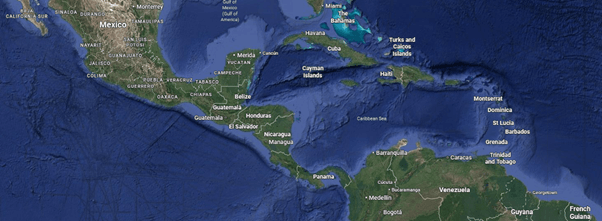
This made Panama the perfect crossroads for the Spanish Empire in the Americas. Goods from the west coast of South America passed through Panama’s “Royal Road”, arriving at the Atlantic to be carted off to Spain, and vice-versa.
During the three centuries of Spanish rule, the settlers had an immense influence that created a lasting impact. The most obvious result was the spread of the Spanish language and Catholic religion that are still prevalent to this day. But other traditions have persisted.
For instance, the carnivals became a popular religious celebration under Spanish rule. Today, the Carnaval de Las Tablas has become an iconic festival in Panama, with tourists and locals alike flocking to the beach town every year to attend the colorful and joyful events.
Panama ultimately declared its independence from Spain in 1821. But it did not immediately transition into the country we know of today. The isthmus first joined the Republic of Gran Colombia though Panamanians soon started clamoring for independence. That is where another actor came into play: the United States, who helped Panama leave the Republic in 1903.
U.S. Presence
Following Panama’s independence, the U.S. built a canal in the isthmus, an infrastructure that fundamentally transformed global trade. Allowing ships to go from the Atlantic to the Pacific Ocean without having to go around the American continental mass contributed to colossal time saving and cost reduction.
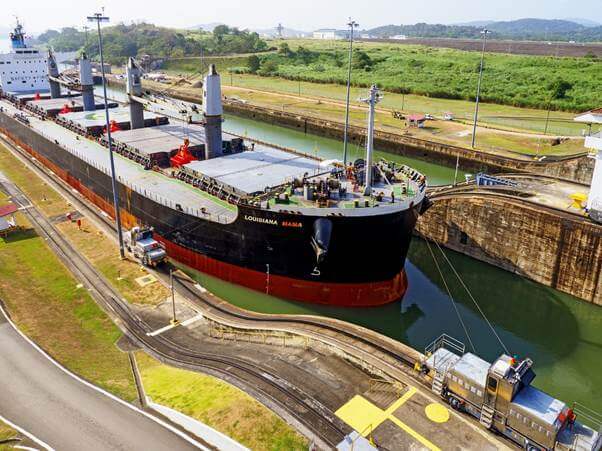
The U.S. construction took a decade to be completed, up until 1914.Once finalized, the U.S. officially owned the canal, controlling its management and revenue for 85 years until finally transferring ownership to Panama on December 31, 1999. However, a century of U.S. presence in the isthmus still left its traces, from slang loanwords to neighborhood names such as Clayton.
Panama’s Cultural Foundations & Global Influences
Indigenous Roots
There are approximately 10 different indigenous groups that represent 17.2% of the country’s current population. Each group has distinct identities, languages, structures, and beliefs. For instance, the Guna Yala live in politically autonomous comarcas, mainly on small islands off the isthmus’ East coast.
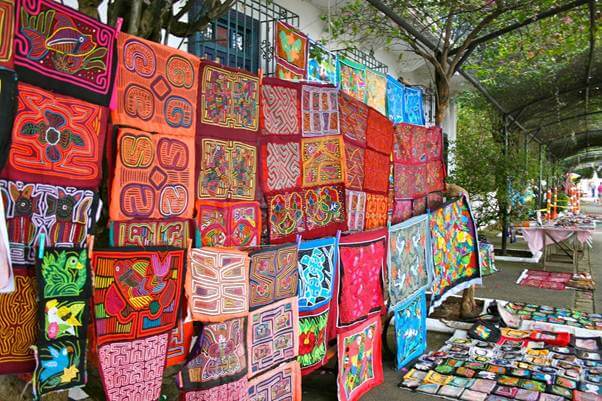
They have their own political organization and are known for their matrilineal social hierarchy. Moreover, they are famous for their distinct jewellery and beautiful handmade textiles called Molas. Their craft is still very much alive and popular among both locals and tourists.
Afro-Panamanian Influence
The Spanish rule brought more than just a change of language and religion. Since Panama was a crossroads, many people transited through the country. Among those were the slaves brought over to work in the colonies. The ones that stayed in the isthmus became the first Afro-Panamanian community. With time, this group would come to have great cultural impact on the country.
Most Afro-Panamanians descend from West African slaves. But another significant part of the group comes from a more recent wave of migration in Panama. Specifically, from the Afro-Antillean population that was attracted by the country’s high labor demand at the end of the 19th century.
Both had immense influence on local culture and traditional Panamanian food, introducing dishes like the enyucado, dances such as the congos, or musical genres like cumbia and reggae, the latter which eventually gave way to the iconic reggaeton.

These influences have shaped the isthmus into a fascinatingly complex country that attracts people from outside while also having a big Panamanian diaspora abroad.
Panama: Migration and History Trends
Immigration: Panama as a Destination
During the construction of the Panama Canal, over 50,000 workers moved in from all over the world in the late 19th and early 20th century. Today, it remains a primary driver of immigration into Panama, cementing the country’s position as a global hub for trade and foreign investment.
Additionally, the country’s relative socio-political stability in the region and almost continuous financial growth make it an excellent destination for people in neighboring countries seeking better opportunities. The isthmus counted over 477,000 migrants in 2024. The biggest communities being Venezuelans, followed by Colombian, Americans, Nicaraguans, and Dominicans.
Emigration: The Pull of Opportunities Abroad
However, many Panamanians also choose to move abroad. The World Bank points out that inequality remains a significant issue for certain groups in the country, especially between urban and rural areas.
UNDESA estimates that more than 194,000 Panamanians lived abroad in 2024, a resounding majority in the U.S due to historical ties.
Panamanians abroad can then help their loved ones have a better everyday life by sending money back home.
Remittances and Financial Inclusion in Panama
Migrant workers often resettle abroad are not always able to bring their family with them. Remittances then become a crucial way to show care and to support their loved ones from afar.
Panama’s remittances market has diverse international corridors, tightly connected to its global migration patterns. It is both a major sender and receiver of cross-border money transfers.
These are the top remittance sending countries to Panama:
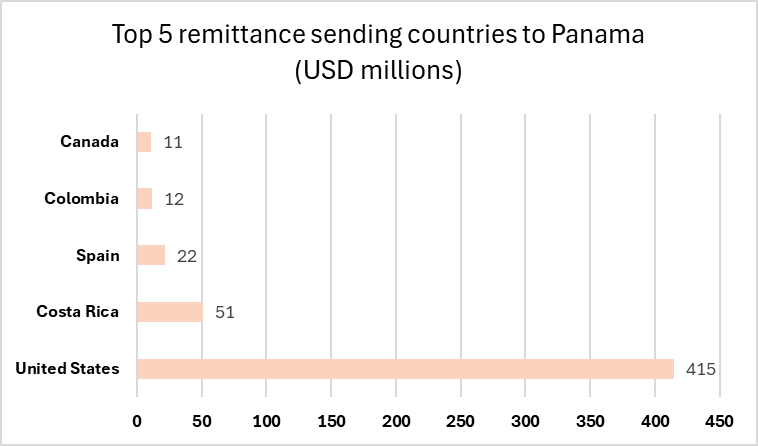
World Bank Data via Remitscope.
Conversely, these are the top remittance receiving countries from Panama:
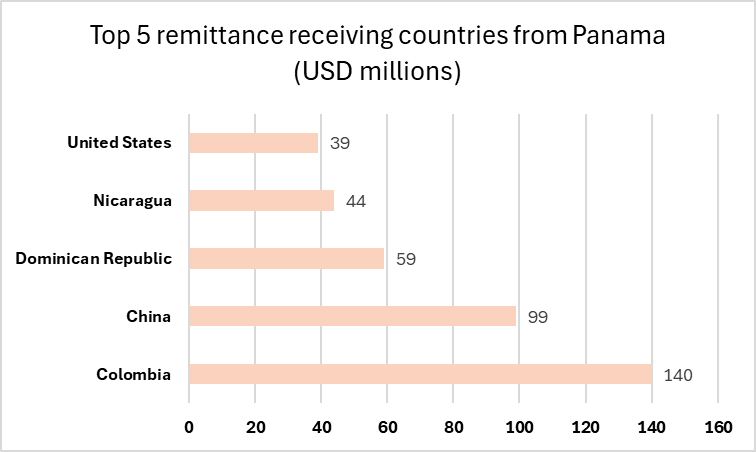
World Bank Data via Remitscope.
Total remittance outflows reached $596.2 million USD in 2024, showing that although the migrant communities in Panama are not the biggest in numbers, they are sending a lot of money back home.
On the other hand, remittance inflows in 2024 represented $531.6 million USD. These numbers prove that, while remittances are key in supporting households in the isthmus, the country is not dependent on them for economic growth.
Ria Supporting Financial Inclusion in Panama
Ria plays a hands‑on role in Panamanian remittances by combining international reach with local availability, helping diaspora communities stay connected to families back home.
Through bank deposit, cash pickup, and digital solutions, Ria offers flexible payout options for families in Panama. This enables customers to choose the channel and payout method that best fits their situation.
Moreover, we recently opened a Ria store in Panama City, located in the Grand National Transportation Terminal in Albrook. This milestone brings us closer to the communities we serve, making our services more accessible to customers who rely on remittances.
Through fast, secure transfers and flexible payout options, we are committed to helping Panamanians abroad and foreigners in the isthmus support their loved ones back home.
Want to send money to your loved ones in Panama, or need your relative abroad to help out with expenses? Use Ria’s app, web, or go to find your nearest location, including our new Ria store!
FAQs
Why is Panama considered a migration crossroads?
Because of its geographic location and the Panama Canal, Panama has long attracted global workers, traders, and migrants.
What are Panama’s main cultural influences?
Many Panamanians leave the country due to persisting inequalities and to seek better opportunities abroad.
What are Panama’s main cultural influences?
Panama’s culture blends Indigenous, Spanish, Afro Caribbean, and global influences brought by canal era migration. They have influenced Panamanian food, music, art, and dance.
How many Panamanians live abroad?
Over 194,000 Panamanians live mainly in the U.S., Spain, Costa Rica, and Colombia, forming strong diaspora communities.
How do remittances support families in Panama?
They support education, medical expenses, food, housing, and emergencies—a critical lifeline for many households.
Why do Panamanians migrate?
Common reasons include better education and more economic opportunities.
About the author
)
Myriam Fernández German
Myriam Fernández German is a content writer with a multicultural background who explores the social and financial impact of remittances in today's global society.
Related posts
)
)
Living in Japan as a Foreigner: How to Read the Room and Feel at Home
Japan always leaves a strong impression on those who visit the country. Its cities are clean and efficient, public transport is known to be reliable, and everyday life often feels remarkably organized. These factors make it easy to understand why so many people choose moving to Japan as a foreigner: to live, work or study
)
)
From Dance to Values: Uncovering the Full Iceberg of Culture
Are you familiar with the “Iceberg of Culture”? Developed by anthropologist Edward T. Hall, it shows that culture goes far beyond what we can see, shaped as much by visible expressions as by deeper, often invisible elements. On World Day for Cultural Diversity, we’re exploring both sides of that iceberg. From language and dance to []
)
)
International Dance Day: How Movement Connects Cultures
Dance is a timeless art expressed through movement. It has been used by humanity for millennia to convey meaning and emotions. To this day, dances hold memories and wisdom from ancestral times. They’re a powerful marker of identity that transcends borders and ages, bringing cultures together. That is why many migrants use dance as way []
)
)
We Folded One Thousand Cranes for Children
Key Takeaways ▪ Senbazuru is a Japanese tradition of folding 1,000 paper cranes to express hope, healing, or peace.▪ The paper crane symbolizes long life and resilience in Japanese folklore.▪ Sadako Sasaki, a Hiroshima bombing survivor, made the tradition globally known while battling leukemia.▪ Her story turned the paper crane into an international symbol of []