)
)
Living in Japan as a Foreigner: How to Read the Room and Feel at Home
)
)
Japan always leaves a strong impression on those who visit the country. Its cities are clean and efficient, public transport is known to be reliable, and everyday life often feels remarkably organized. These factors make it easy to understand why so many people choose moving to Japan as a foreigner: to live, work or study there.
But after the honeymoon period—enjoyed by many when settling in Japan—comes to an end, expat and migrants often discover that adapting to life in the country involves more than finding an apartment, learning train routes, or setting up a bank account. The bigger challenge is understanding the social expectations that shape day-to-day, which can be vastly different to the rest of the world.
Many aspects of Japanese society run on shared understanding as opposed to explicit instructions. People queue without being told, public spaces remain remarkably orderly, and everyday interactions are often guided by social cues that can take time to recognize. The Japan Tourism Agency notes that consideration for others and awareness of your surroundings sit at the heart of many social customs in the country.
And while the adaptation process can be challenging, it’s also one of the most rewarding parts of building a life in Japan.
Japan’s Unwritten Operating System: Reading the Room
One of the first things many migrants notice is that conversations do not always unfold in the way they might expect or are used to.
Japan is widely described as a high-context culture, meaning people often rely on context, tone, shared understanding, and non-verbal communication alongside spoken words. Japanese communication tends to be indirect, and people are often attentive to body language, expressions, posture, and tone when interpreting meaning.
This doesn’t mean communication is intentionally confusing; rather, there is often a focus on preserving harmony and avoiding unnecessary conflict. Moreover, ambiguity may sometimes be used to maintain the balance or prevent embarrassment, particularly in situations where direct refusal could feel uncomfortable.
Silence can also carry meaning as seen in many Western cultures where pauses in conversation may feel awkward or signal disagreement. In Japan, silence may simply indicate that someone is considering what has been said and is often associated with thoughtfulness, politeness, and respect.
For migrants, adapting to this communication style is often less about mastering a rulebook and more about developing observation skills, particularly if you come from a low-context country. Paying attention to how people interact, communicate, or behave can reveal a great deal about local expectations.
Everyday Etiquette: Public Spaces, Neighborhoods, and Language
The steep learning curve often begins with the smallest parts of everyday life. One aspect of Japanese culture that surprises many newcomers is the importance of not inconveniencing others.
Be it on public transport, in apartment buildings, or in busy shopping districts, the Japan Tourism Agency recommends showing consideration for local environments, public spaces, residents, and even other visitors. Respecting these aspects of society plays a significant role in daily routines.
This also applies on a more micro level: people queue patiently, conversations are quieter, and public spaces appear more organized.
New residents also encounter practical customs that quickly become part of daily life in Japan. Removing shoes before entering certain homes, restaurants, traditional accommodation, and cultural sites is common throughout Japan. Likewise, waste disposal often requires following detailed local sorting and recycling rules.
Another crucial aspect to consider is language. While it’s possible to get by with limited Japanese in some major cities, knowing even a handful of phrases can make daily interactions smoother. Further, learning non-verbal communication, such as bowing, is seen as a polite, loyal, and courteous, and is appreciated by the Japanese people.
Most people understand that newcomers are learning, so being perfect is not the goal: what matters is showing a willingness to participate in the social norms of the community around you.
Cultural Fluency: Work, Social Life, and Belonging
The workplace is often where migrants encounter Japanese cultural expectations and norms most directly, as working in Japan as a foreigner can be sometimes challenging.
Japanese communication and management practices frequently point to the importance of hierarchy (albeit it’s not a concept that’s viewed exactly the same as in Western countries), with continuous, collective effort towards harmony. That is, everyone chips in to help whenever issues arise.
Punctuality is another widely recognized value. By being punctual in the workplace, migrants can show that they are reliable and respectful, attending to the anticipation of the need of other people.
Outside of workplace culture, adapting socially can take longer. Some migrants find it surprisingly difficult to build deeper connections despite living in vibrant and densely populated cities. Migrants will run into challenges such as language barriers, cultural differences, and unfamiliar social norms as factors that can contribute to social isolation.
One of the most common obstacles in Japan is the language. The country’s Agency for Cultural Affairs cites the Japanese language as being the basis of their culture, and they go out their way to promote it to foreigners by providing support for language education programs.
Japanese is a complex language, but fluency isn’t required to feel at home: even modest language skills can open doors to conversations and opportunities that might otherwise remain out of reach.
Diasporas and Community: Building Home Away from Home
Across Japan, migrants often rely on a mix of support services, foreign-friendly community groups, language classes, cultural organizations, and personal networks to help navigate their daily routines, which is often very different from their countries of origin.
Government agencies and local authorities provide resources designed to support international residents, while community initiatives create opportunities to meet people facing similar experiences. These resources often become a valuable source of practical advice, whether someone is looking for housing information, language support, or employment guidance.
Connecting with migrants from your own diaspora can help people maintain important connections to their own culture, even as people become more integrated into Japanese society.
Over time, many migrants develop a balance between old and new influences. Our recent study showed that on average, 38.2% of migrants feel equally identified with their country of origin and the host country. Rather than choosing between two identities, they create a version of home—and themselves—that incorporates both.
Belonging Is Built in Small Moments
Life in Japan can be rewarding, challenging, surprising, and deeply enriching. But belonging rarely happens all at once, and often it grows in small moments, like learning a new phrase or joining a local activity.
Even though Japan’s unwritten rules can feel difficult to decode at first, many of them stem from values that are easy to appreciate: respect for others, consideration for shared spaces, and a desire to maintain harmony within communities.
For migrants building a life in Japan, adaptation is about learning through new experiences while maintaining the essence of where you come from.
If you’re living abroad in Japan and want to send money back home, you can do so through the Ria web, app, or by visiting the nearest Ria location. You can also learn about our services in Japan on the Kyodai website.
FAQs
What is it like living in Japan as a foreigner?
It can be safe, efficient, and rewarding, but requires adapting to social norms and indirect communication.
Is Japan good for foreigners to live in?
Yes, especially for those who value structure and safety, but adaptation takes time and effort.
What are the biggest challenges?
Language barriers, cultural differences, social integration, and bureaucracy are the most common.
Can you live in Japan without speaking Japanese?
Yes, in major cities. However, basic language skills significantly improve daily life and relationships.
How do foreigners make friends in Japan?
Through hobbies, language exchanges, work, and finding community groups in Japan where repeated interaction builds trust.
What cultural rules should foreigners know?
Respect quiet public spaces, follow etiquette, and learn to read indirect communication cues.
How do foreign communities stay connected?
Through cultural groups, food, religion, events, and online networks that provide support and belonging.
About the author

Shay Conaghan
Your friendly neighbourhood Content writer. Scottish-Spanish, or something along those lines.
Related posts
From Dance to Values: Uncovering the Full Iceberg of Culture
Are you familiar with the “Iceberg of Culture”? Developed by anthropologist Edward T. Hall, it shows that culture goes far beyond what we can see, shaped as much by visible expressions as by deeper, often invisible elements. On World Day for Cultural Diversity, we’re exploring both sides of that iceberg. From language and dance to []
International Dance Day: How Movement Connects Cultures
Dance is a timeless art expressed through movement. It has been used by humanity for millennia to convey meaning and emotions. To this day, dances hold memories and wisdom from ancestral times. They’re a powerful marker of identity that transcends borders and ages, bringing cultures together. That is why many migrants use dance as way []

We Folded One Thousand Cranes for Children
Key Takeaways ▪ Senbazuru is a Japanese tradition of folding 1,000 paper cranes to express hope, healing, or peace.▪ The paper crane symbolizes long life and resilience in Japanese folklore.▪ Sadako Sasaki, a Hiroshima bombing survivor, made the tradition globally known while battling leukemia.▪ Her story turned the paper crane into an international symbol of []
The Science of Accents: Why We Sound Different Abroad
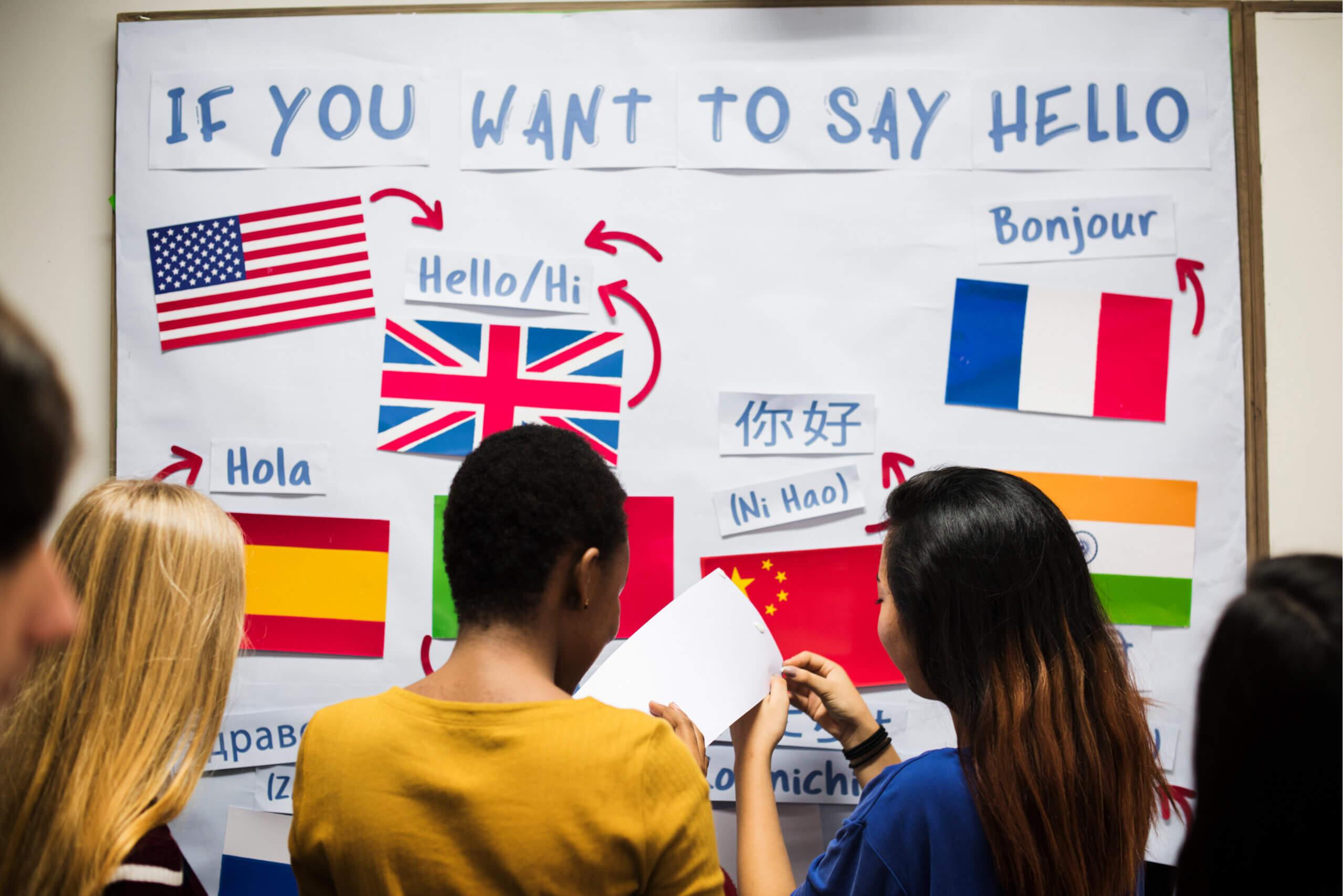
Everyone has an accent. From the moment we arrive somewhere new, our voice can be a standout. That’s because accents act as social signals: they can hint at region, community, and lived experience long before we share our full story. However, it’s important to separate a common misconception from science: an accent isn’t a pronunciation []