)
)
How Mobile Wallets Are Transforming Remittances and Financial Inclusion in Peru
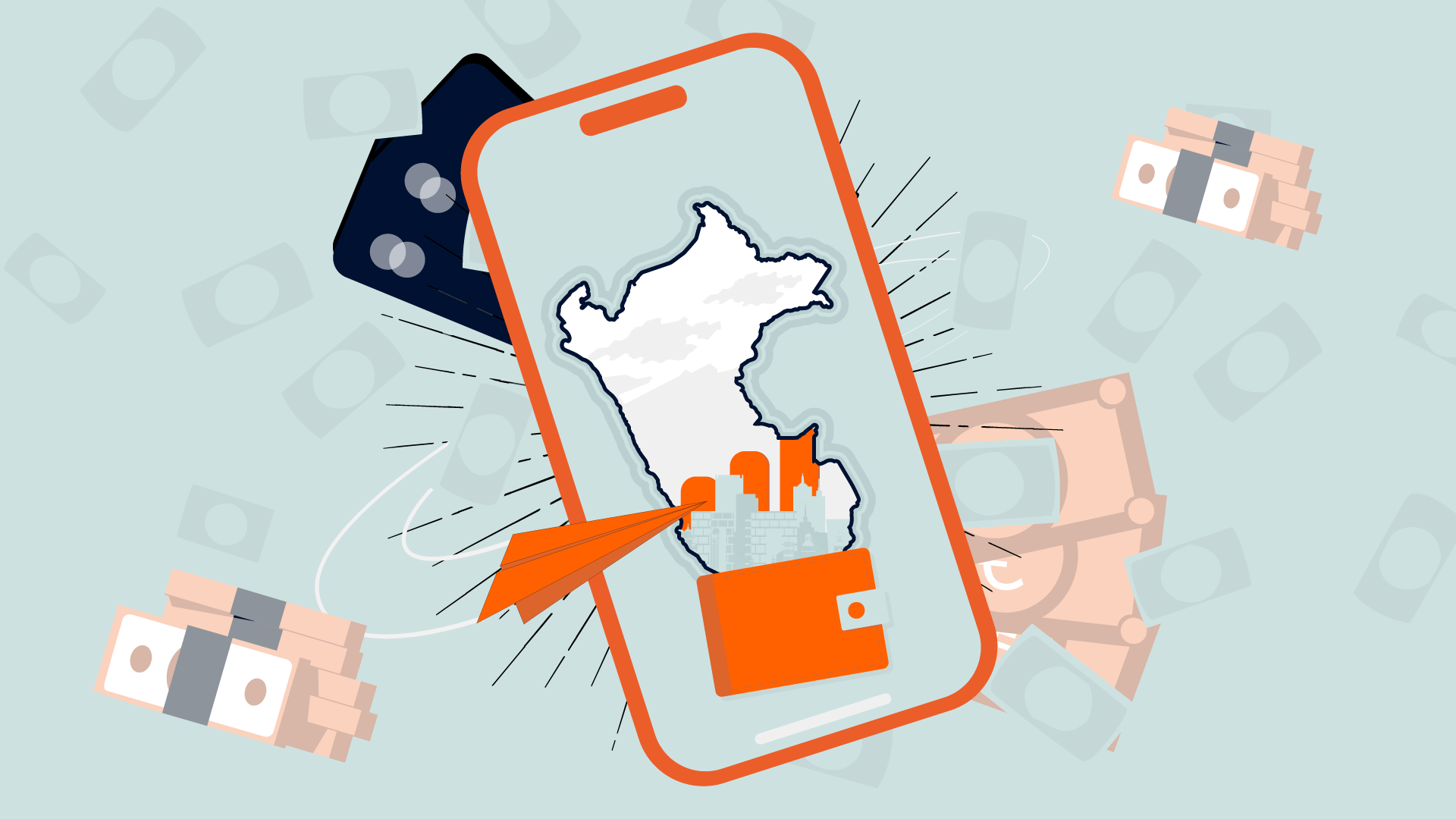
Peru’s history has been shaped not only by its ancient roots but also by successive waves of migration that brought new perspectives, skills, and traditions. From early settlers to more recent immigrant communities, these movements have influenced the country’s economy, society, and identity in lasting ways. Today, just as past migration helped weave together new opportunities and ways of life, modern technological shifts are reshaping how people connect and thrive.
One of the most significant transformations is happening in financial inclusion. Digital solutions like mobile wallets are empowering millions of Peruvians, including migrants and their families, to access vital financial services and support each other from afar.
In this post, we’ll explore how migration has influenced Peru’s development, and how digital tools are opening new doors for inclusion, opportunity, and growth.
Key Takeaways
• Peru’s cultural identity has been shaped by waves of immigration, notably from Italy, China, and Japan.
• Each immigrant group contributed significantly to Peruvian gastronomy, creating fusion cuisines like chifa and Nikkei.
• Over 3.49 million Peruvians live abroad, with large communities in the U.S., Spain, Argentina, and Chile.
• Peru also hosts over 1.35 million immigrants, mostly Venezuelans, creating a dynamic migration landscape.
• Mobile wallets like Yape, supported by Ria, are revolutionizing financial inclusion for Peru’s largely unbanked population.
• These digital tools enable fast, secure, and accessible international money transfers, strengthening cross-border family ties.
Global Roots: How Immigration Has Shaped Peru
Immigrants from all over the world move to Peru, where over 1.3 million foreigners have settled down in the last year.
However, some specific groups have had a larger impact, seamlessly incorporating their own customs and traditions into Peruvian culture.
Italian Legacy in Peru
Peru has received one of the most significant migratory flows of Italians in South America, which started as early as the Spanish colonial era. Back then, many Italians were employed as marine captains due to a lack of qualified professionals in Spain. Italian arrivals then peaked during the Guano Era, between the 1840s and 1860s, when Peru’s economy boomed thanks to guano exports (a mix of bat, sea birds, and seal excrements used as a fertilizer). The most recent notable wave of immigration occurred during World War II, as many fled political persecutions in Italy.
Since then, Italians have fully integrated into Peruvian social and economic life, contributing extensively to Peruvian cuisine as they tried to recreate recipes from back home with local ingredients. This gave rise to new iconic dishes with creative variations, as well as the incorporation of staples like panettone, now a popular Christmas treat in Peru.
Chinese Immigrants’ Enduring Influence
The first Chinese immigrants arrived in Peru in the 19th century, mainly to work in the fields or guano mines, where labor was much needed. Through word of mouth, many heard of the opportunities and made the journey to Peru.
Chinese immigrants brought a whole new set of traditions to local culture. They popularized tea, calligraphy, martial arts, and traditional Chinese medicine techniques. But their main contribution by far is chifa food. Born from integrating Chinese culinary traditions with Peruvian ingredients, one of the world’s best regarded cuisines was born. Arroz chaufa, one of their signature dishes, has become an iconic part of Peru’s gastronomy and can be found at any Peruvian restaurant.
Japanese Effect on Gastronomy
Much like Chinese immigrants, the Japanese first wave of immigration arrived in the late 19th century. At the time, Japan was in the midst of the Meiji Restauration, an era of industrialization when agriculture was pushed aside. Countless farmers and workers found themselves without work and in precarious situations. At the same time, Peru needed labor for its agricultural sector. So, both countries signed an agreement to facilitate the migration of Japanese workers.
Today, there are more than 200,000 people of Japanese descent living in Peru, most of them descendants of immigrants who arrived in the late 1800s. Over time, they became fully integrated in Peru, but they also contributed to it by deeply influencing Peruvian cuisine. The fusion of Japanese and local ingredients is known as Nikkei cuisine, classified as fusion cuisine. Their innovative recipes combine the best of both worlds, giving birth to dishes like maki encevichado, a delicious mix between ceviche and makis. Thanks to its innovative creativity and delicious flavor combinations, Nikkei cuisine is becoming increasingly popular, not only in Peru, but around the world.
Peru has welcomed a wide range of cultural influences over the centuries. Each contribution has enriched the country’s identity, adding new flavors, rhythms, and customs to its already diverse heritage.
The Current Landscape of Migration in Peru
Migration in Peru has always been a two-way street. While the country has welcomed a growing number of immigrants, millions of Peruvians have also moved abroad in search of better opportunities.
According to Peru’s National Institute of Statistics and Informatics (INEI), more than 3.49 million Peruvians currently live abroad, which represents roughly 10.5% of the national population. The largest Peruvian communities are found in the United States (30.2%), Spain (15.6%), Argentina (13.5%), and Chile (11.7%).
At the same time, Peru has become a destination for migrants, especially from Venezuela. As of 2023, over 1.35 million foreigners resided in Peru, with 86% being Venezuelan nationals. And as immigrants to and from Peru continue to build bridges across borders, technology is playing an increasingly important role in keeping those connections alive.
In the next section, we explore how digital financial tools such as mobile wallets are transforming how people manage their money, support loved ones, and stay united across distances.
How Mobile Wallets Are Driving Financial Inclusion in Peru
In Peru, over 71% of the population work in the informal sector, which means they often lack access to traditional financial institutions and their services, such as bank accounts or loan requests, among other things. These people are referred to as unbanked.
Almost half of the unbanked individuals in Peru declare that the lack of good financial institutions is also an obstacle to financial inclusion. But modern digital financial solutions are bridging that gap and offering them access to financial services, namely through mobile wallets.
Mobile wallets are essentially mobile phone applications or services that allow users to store, send, receive, and manage money digitally, often without needing a traditional bank account or payment card. This fast and secure mechanism allows users to transact directly through their phone.
Considering that 79% of the Peruvian population has a mobile phone and 90% has access to the internet, this tool is a perfect way to provide unbanked individuals in the country with access to financial services.
Mobile wallets are increasingly evolving into multipurpose tools, allowing users to handle everything from shopping to bill payments, from requesting loans to making international money transfers, all from the comfort of their phones. And they are becoming increasingly popular everywhere around the world.
At Ria, we are committed to providing fast, secure, and accessible money transfer services, expanding our digital portfolio to offer our customers financial tools that are truly tailored to their needs.
That is why we have partnered with Yape, a mobile wallet developed by Banco de Crédito del Perú, one of Peru’s largest banks. Launched in 2016, it has become overwhelmingly popular thanks to the easy-to-use features, large service portfolio, and widespread accessibility.
Through Ria’s largest real-time money transfer network, Yape’s remittance feature allows migrant workers living in Peru to send money from their mobile wallet account to their loved ones back home. Vice-versa, the relatives of those who have moved out of the country can receive money transfers directly on Yape. No more cash-pickups or bank accounts needed, it’s that easy.
As Peruvians and migrants living in this country continue to navigate life across borders and generations, these digital solutions are helping them stay connected to each other in simple, accessible ways. Every time our customers send money back home, they contribute to making the world a better place, by helping their families cover emergencies, basic needs, and build a better future.
Financial Inclusion and Connection Through Digital Solutions
In this ever-evolving world, mobile wallets play a vital role. With the launch of Yape’s international remittance feature, sustained by partners like Ria, migrants to and from Peru can now send and receive money across borders.
Because at Ria, we know how important it is to create fast, secure, and accessible paths for you to support your loved ones. Every time our customers send money back home, they help their families cover emergencies, basic needs, and build a better future.
If you want to send money to your loved ones in or from Peru, use our web, app, or visit your nearest Ria location. Visit our page to learn more about how to send money to Yape.
FAQs
What is the role of mobile wallets in Peru’s financial inclusion?
Mobile wallets help unbanked Peruvians access financial services like payments, loans, and remittances without needing a bank account.
How many Peruvians live abroad and where?
Over 3.49 million Peruvians live abroad, mainly in the U.S., Spain, Argentina, and Chile.
What is Yape and how does it support remittances?
Yape is a mobile wallet by Banco de Crédito del Perú that allows users to send and receive international money transfers via Ria.
Which immigrant groups have influenced Peruvian culture the most?
talian, Chinese, and Japanese immigrants have had a major impact, especially on Peruvian cuisine.
How do mobile wallets help migrants in Peru?
They allow migrants to send money home easily and securely, supporting their families without needing cash pickups or bank accounts.
Why is financial inclusion important in Peru?
With 71% of Peruvians working informally, financial inclusion helps improve access to essential services and economic opportunities.
About the author

Myriam Fernández German
Myriam Fernández German is a content writer with a multicultural background who explores the social and financial impact of remittances in today's global society.
Related posts
Moving to the US from Colombia: Your Financial Checklist
Everything to sort out in your first months in the US if you're coming from Colombia: ITIN, bank account, work permit, consulate, and how to send money home.

Living in Japan as a Foreigner: How to Read the Room and Feel at Home
Japan always leaves a strong impression on those who visit the country. Its cities are clean and efficient, public transport is known to be reliable, and everyday life often feels remarkably organized. These factors make it easy to understand why so many people choose moving to Japan as a foreigner: to live, work or study
The Currency of Caring: The Human Side of Remittances
Every year on June 16th, the world observes International Day of Family Remittances. On that date, we recognize the millions of migrants who send money back home to support their loved ones, helping build a better future for countless households across the globe. Although there is a lot of data about the financial impact and []
Sadio Mané and Ria: Empowering the Global Diaspora
Sadio Mané is considered one of the best and most recognizable African footballers of all time. But the Senegalese striker is more than just a global football icon: throughout his career, he’s reinvested his earnings back into his community, bridging the gap between football, migration and financial empowerment. That’s why at Ria we are extremely []