)
)
International Mother Language Day: A Bridge to Cultural Diversity

There are over 7,000 languages spoken on planet Earth, each one a critical tool developed over time to help humans navigate the world around them, even if that world is an isolated mountaintop shared by just a handful of people.
International Mother Language Day is celebrated in many countries worldwide on February 21 to acknowledge the importance of linguistic and cultural diversity and promote multilingualism. This year’s theme revolving around youth and education, highlights young people’s involvement in multilingual education.
The United Nations Educational, Scientific and Cultural Organization (UNESCO) says that languages play a much bigger role in our lives than we think. In fact, they affirm that languages are central to identity, learning, well-being, and participation in society. That’s why they work to preserve linguistic diversity around the globe, advocating for multilingual education, among other things.
The world is an extremely heterogeneous place with countless multicultural societies. Why wouldn’t there be so many languages used to navigate it? Our varied surroundings have helped shape the many languages spoken by humans, but does the language we learned as children, our mother tongue, influence the way we see the world?
Key takeaways
▪ International Mother Language Day highlights the importance of preserving the diversity of languages.
▪ Over 7,000 languages are spoken worldwide, but many are at risk of disappearing.
▪ Language shapes how we think, feel, and interpret the world around us.
▪ Migrant communities play an essential role in keeping mother tongues alive across borders.
▪ Celebrating and using your mother tongue strengthens cultural identity and intergenerational connection.
Language Shapes Culture, Identity, and Point of View
Language Is Influenced by the Environment
What is the role of mother tongue? We know that the features of the land, vegetation, climate and resources of each corner of the planet have helped shape the culture and the language of the people who live there.
The Sami people, who inhabit the northernmost parts of Scandinavia and Russia, have at least 180 words to describe snow and ice, elements that greatly influence their ability to survive the harsh conditions they live in. Most of the many languages spoken in the region of the Caucasus Mountains, between the Caspian and the Black Sea, share many of the same ejectives, which are unusual, often difficult to pronounce sounds found in about 20% of the world’s languages.
One 2013 study concluded that the different languages adopted similar sounds due to the high altitude common to the area. Without a doubt, environment has helped shape the world’s languages.
Language Can Influence Perception
But does language influence how its speakers think? A language’s sentence construction and grammar can influence how its native speakers interpret events, according to one study carried out at Stanford University. It found that speakers of Japanese and Spanish find it more difficult to remember accidental events than English speakers. This is possibly because the former languages leave out the subject when recounting accidental events, making those less memorable.
Similarly, cognitive scientist Lera Boroditsky has shown that language can shape our perception of time. Most English speakers view time as a horizontal line, in line with the direction in which they read a text. However, Mandarin speakers are more prone to perceive time as a vertical line, with the top being the past and the bottom representing the future. In fact, the Mandarin word often used to describe future events (xia) literally translates to “down”.
Language Conveys Culture and Values
Part of the challenge in researching the effect language has on human perception is that it is extremely difficult to separate it from culture. Language is used not only to describe objects around us but to convey values and ideas as well, as part on one’s language identity.
For the Chinese, family is highly important. That may be why the language includes so many words related to the concept of family. In Korean, the word “nunchi”, literally “eye-measure”, has no precise English translation. The word refers to the Korean idea that one can master the art of rapidly processing social information to gain understanding and insight into what others are thinking and feeling.
Mother Tongue Abroad: Emotion, Community, Trust
Mother Language Invokes Emotion
Language isn’t just a collection of words but a bridge to a person’s culture, values, identity, and beliefs. In the words of Nelson Mandela, “If you talk to a man in a language he understands, that goes to his head. If you talk to a man in his own language, that goes to his heart.” A mother language connects the individual to the strong human emotions experienced during the most formative period of life: childhood. In fact, research suggests that people have different emotional responses when communicating in a language that is not their native tongue.
One University of Chicago study concluded that people were less emotional when making decisions when information was presented in their non-native tongue not because they had to focus their brainpower on understanding a second language, but because they were cut off from the sentiment their mother tongue invoked in them. “Your native language is acquired from your family, from your friends,” explained one of the researchers, Sayuri Hayakawa. “It becomes infused with all these emotions.”
Mother Language Fosters Trust
A conversation in a person’s mother language establishes a strong emotional connection and promotes understanding and trust. Communicating with customers in their mother language is important, which is why at Ria, we have a team of people from more than 80 nations and provide customer care and in-store service in the languages that make our customers feel at home.
Because language is much more than a collection of words to describe the objects and environment around us. It is intimately tied to culture, values, and a storehouse of shared experience and human emotion.
Mother Language in Diaspora Communities
In immigrant communities, the mother tongue is often seen as a way to connect with others. As established, language opens doors to a whole array of perspectives and cultural references, like famous movies, notorious singers, or even funny memes online. These common experiences create a shared identity that can be the glue bonding people together.
The case of second-generation immigrants is more complex. Already, they are torn between two different identities. In this case, knowing their parents’ mother tongue can give them a stronger sense of belonging, even though they might not have grown up in the same country. For those who do not share the same mother tongue as their parents, learning that language can be a way to reconnect with their roots, honor their cultural and language heritage, and become closer with their parents.
Celebrating International Mother Language Day
On February 21st, we celebrate the significance of mother tongues and their impact on shaping our perceptions, emotions, and self-identity.
Mother languages’ widespread role in many aspects of our lives is what makes it so crucial to preserve them. Nearly half of the world’s estimated 7,000 languages are endangered, most of them indigenous languages. That is why it’s important to keep teaching them, learning them, and create stories in these languages.
If you live abroad, you can maintain you mother tongue by organizing or attending cultural events that help share the language and the culture attached to it.
As society becomes more multicultural, languages take on an even more important role: they become the bridge that connects us across borders, even promoting cross-cultural empathy.
The beauty of it is that the way we communicate evolves along with us. Migration and cultural diversity allow languages to expand, becoming richer and incorporating new concepts.
By observing Mother Language Day, we honor the world around us in all its diversity.
Sending love home in any language is priceless. Need to send money to your loved ones? Ria makes it fast and secure—wherever home is. Download our app, visit our website or find your nearest Ria location to get started.
FAQs
It promotes the preservation of linguistic diversity and the right to learn in one’s mother tongue.
UNESCO selected February 21st as International Mother Language Day in recognition of the 1952 Bengali Language Movement in Bangladesh, which defended linguistic rights.
UNESCO estimates around 7,000–8,300 languages, depending on classification.
When languages disappear, cultural identity, traditions, and unique ways of thinking are lost.
Reading poetry, hosting cultural events, learning new phrases, teaching children your native language, and participating in community activities.
Languages develop based on people’s surroundings, influencing vocabulary and sounds to reflect local climate, geography, and culture.
Yes. Grammar and sentence structure can influence how people perceive and remember events.
Language reflects and transmits cultural values, traditions, and ways of thinking, making it a key part of how communities express identity and understand the world.
About the author

Myriam Fernández German
Myriam Fernández German is a content writer with a multicultural background who explores the social and financial impact of remittances in today's global society.
Related posts

Living in Japan as a Foreigner: How to Read the Room and Feel at Home
Japan always leaves a strong impression on those who visit the country. Its cities are clean and efficient, public transport is known to be reliable, and everyday life often feels remarkably organized. These factors make it easy to understand why so many people choose moving to Japan as a foreigner: to live, work or study […]

From Dance to Values: Uncovering the Full Iceberg of Culture
Are you familiar with the “Iceberg of Culture”? Developed by anthropologist Edward T. Hall, it shows that culture goes far beyond what we can see, shaped as much by visible expressions as by deeper, often invisible elements. On World Day for Cultural Diversity, we’re exploring both sides of that iceberg. From language and dance to […]
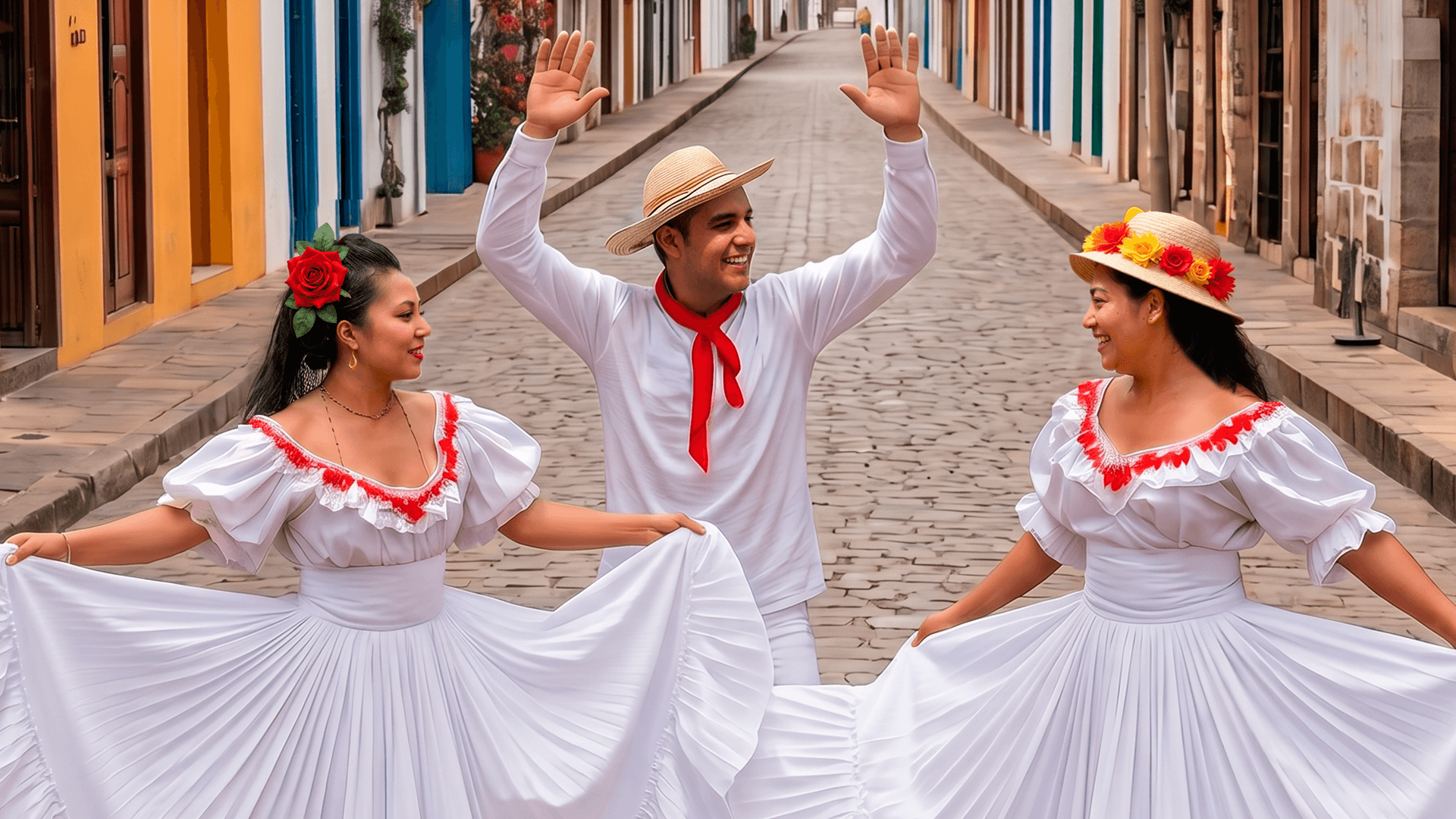
International Dance Day: How Movement Connects Cultures
Dance is a timeless art expressed through movement. It has been used by humanity for millennia to convey meaning and emotions. To this day, dances hold memories and wisdom from ancestral times. They’re a powerful marker of identity that transcends borders and ages, bringing cultures together. That is why many migrants use dance as way […]

We Folded One Thousand Cranes for Children
Key Takeaways ▪ Senbazuru is a Japanese tradition of folding 1,000 paper cranes to express hope, healing, or peace.▪ The paper crane symbolizes long life and resilience in Japanese folklore.▪ Sadako Sasaki, a Hiroshima bombing survivor, made the tradition globally known while battling leukemia.▪ Her story turned the paper crane into an international symbol of […]