)
)
Currency as Culture: The Meaning Behind the Money
)
)
There are more than 180 official currencies in circulation, each with its own style and visual identity. Every bill and coin is a small canvas where countries honor their history, identity, and the values they want to communicate.
At Ria Money Transfer, we connect families and communities across borders and know that money reflects different ways of understanding the world. That’s why we’re taking a closer look at the world’s currencies and the symbols they feature.
The cultural imagery of money
When we look at the designs of coins and banknotes around the globe, patterns emerge. Almost every country uses its currency as a showcase of what it values. Broadly, these messages fall into five recurring symbolic images:
History and heritage
Nature and the environment
Science and progress
Art and architecture
Unity and identity
These reflect the diversity of global communities that use money in different ways.
History and heritage: heroes, independence, and memory
One of the clearest ways a nation defines itself is by showcasing the people and moments that shaped it. That’s why so many currencies feature historical figures, political leaders, thinkers, writers, and activists who embody who represent the heart of a nation’s identity.
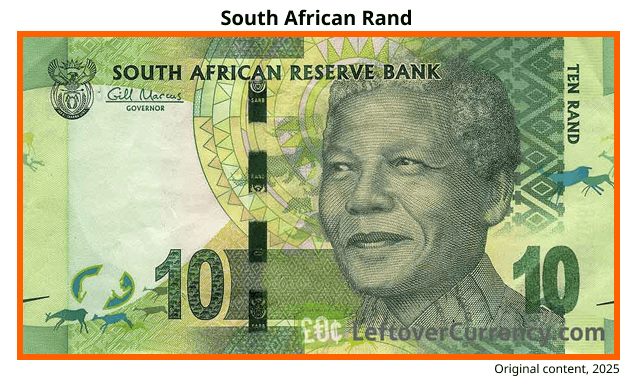
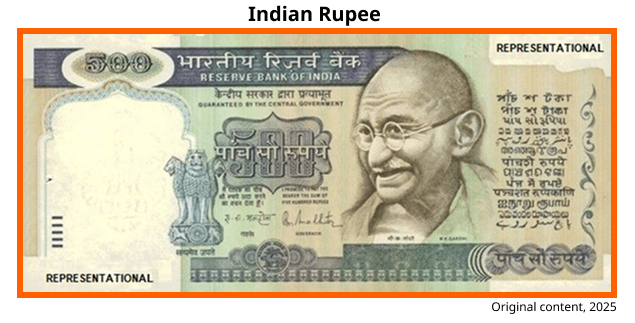
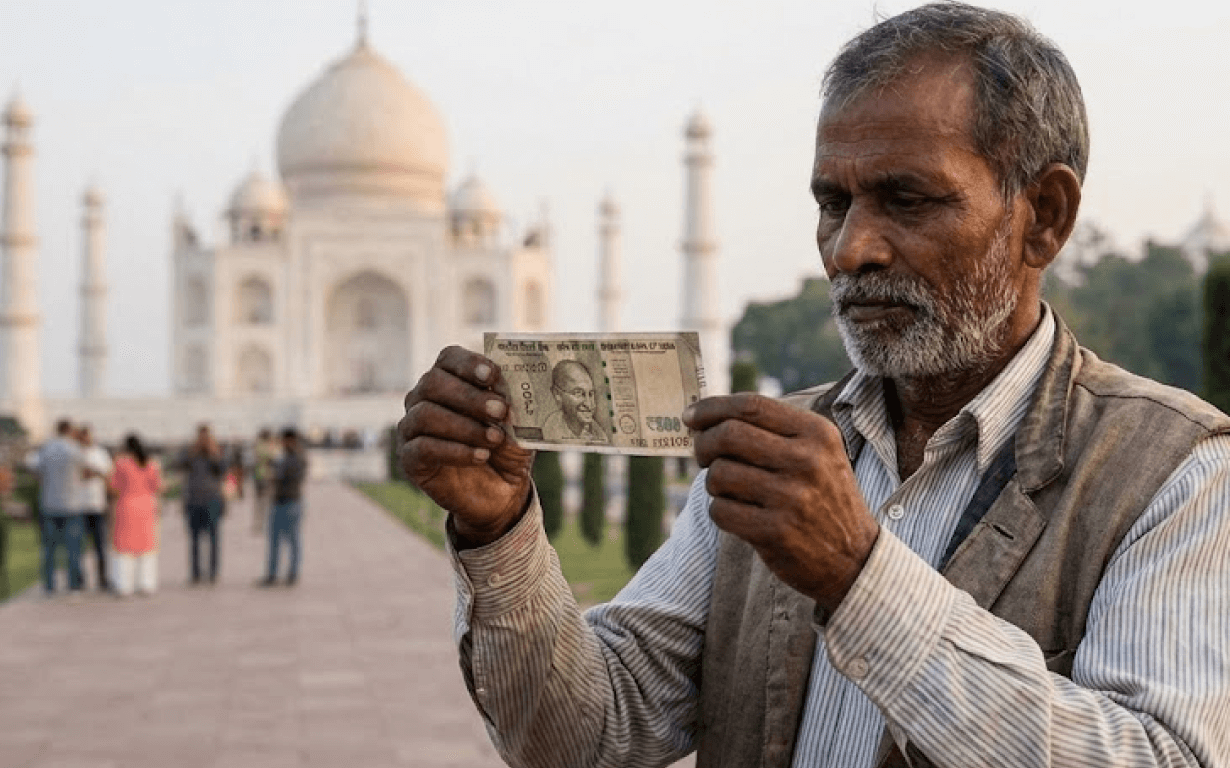
Mahatma Gandhi on India’s rupee (INR) or Nelson Mandela on South Africa’s rand (ZAR) are clear examples. Placing their image on currency is a daily reminder of independence, justice, and reconciliation.
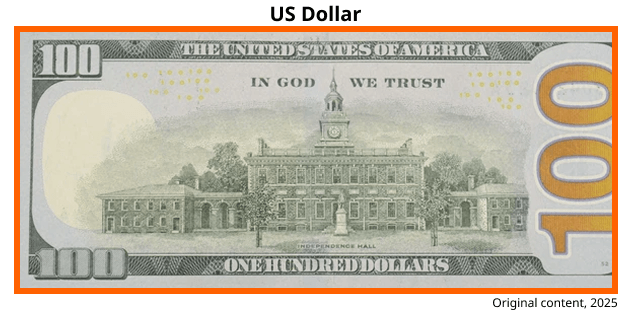
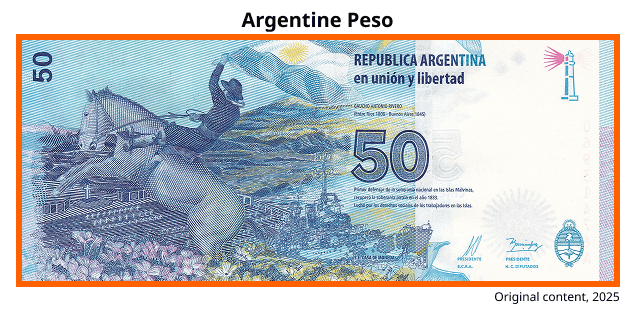
Currencies often showcase milestones as well: key battles, independence events, constitutions, or emblematic monuments. Argentina’s former 50-peso bill featured the Battle of Paraná, while the US dollar depicts Independence Hall.Each banknote subtly integrates the past into everyday transactions, reinforcing collective identity.
Nature and the environment: animals, landscapes, and ecological pride
Nature is another universal theme often seen on currencies. Many nations choose iconic local animals, native plants, or famous landscapes to represent themselves.
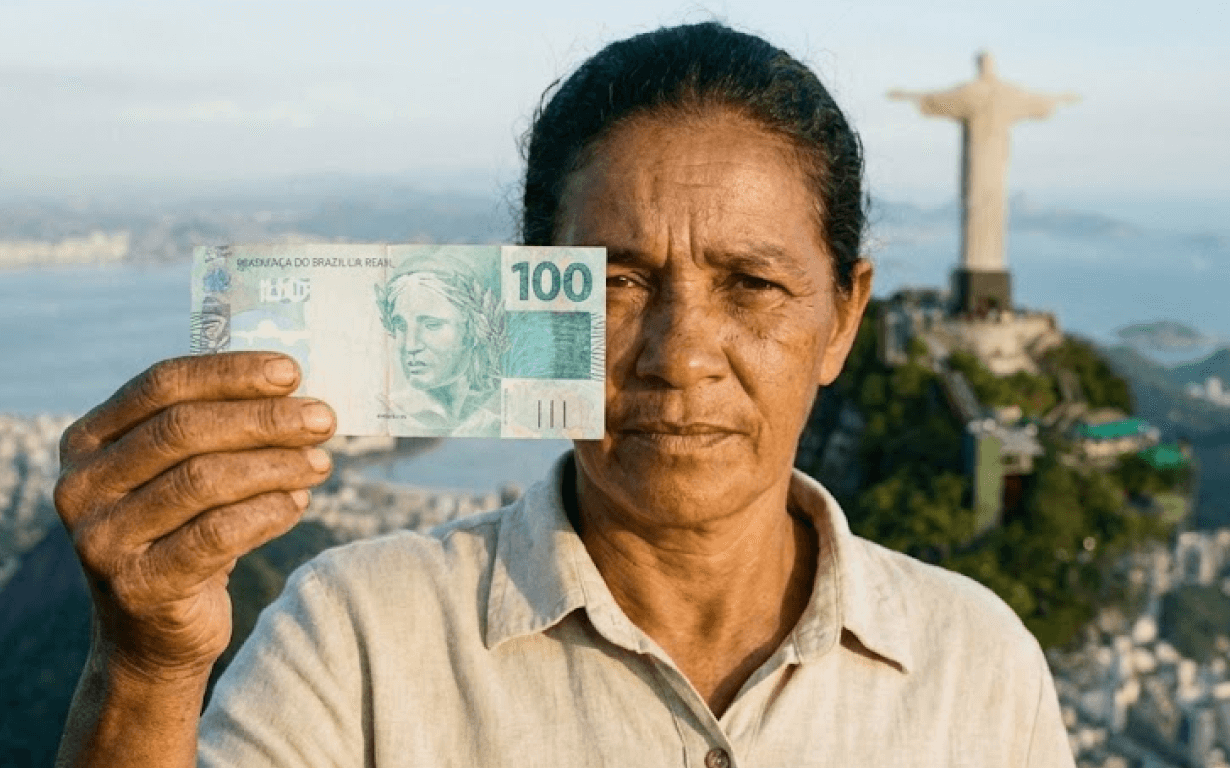
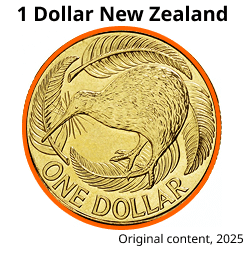
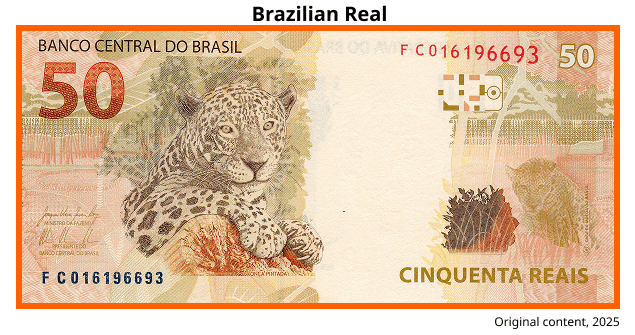
The jaguar on Brazil’s real (BRL) or the kiwi on New Zealand’s dollar (NZD) show how wildlife can reflect a country’s identity. These symbols highlight the animals and landscapes that people cherish—and the natural heritage they’re proud to share with the world.
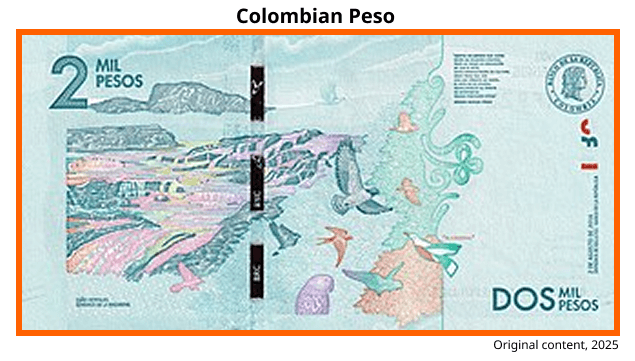
Currencies also highlight rivers, mountains, coastlines, and national parks, turning money into a miniature postcard. A vivid example is the Colombian 2,000-peso note featuring Caño Cristales, one of the country’s most treasured natural wonders.
Science and achievement: innovation, knowledge, and progress
Some currencies focus on the achievement and progress: featuring scientists, inventors, advanced infrastructure, and technological imagery to signal a forward-looking national identity.
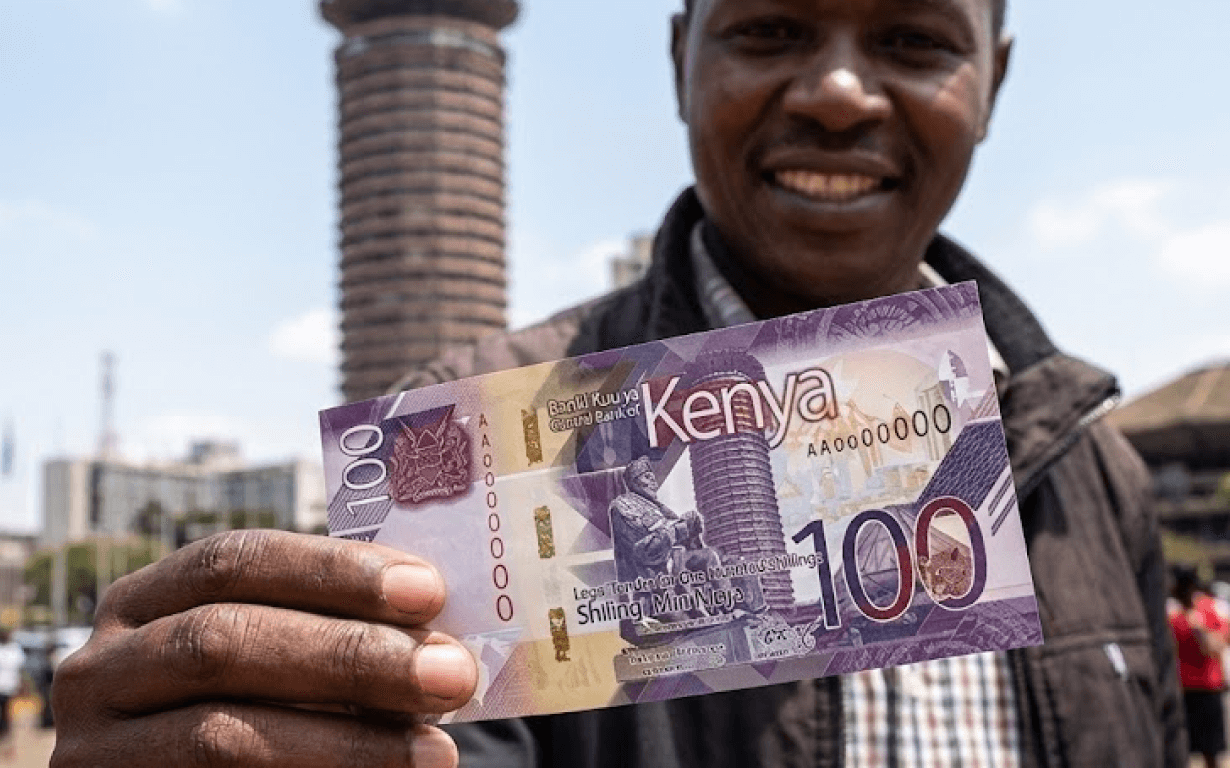
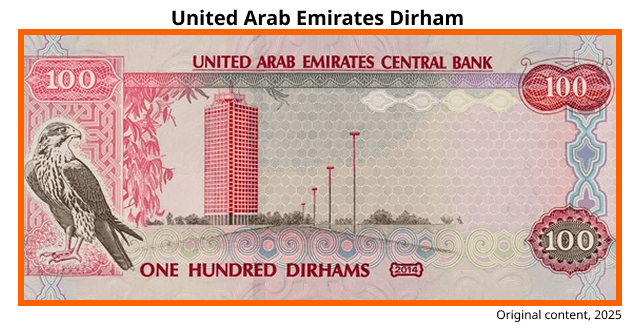
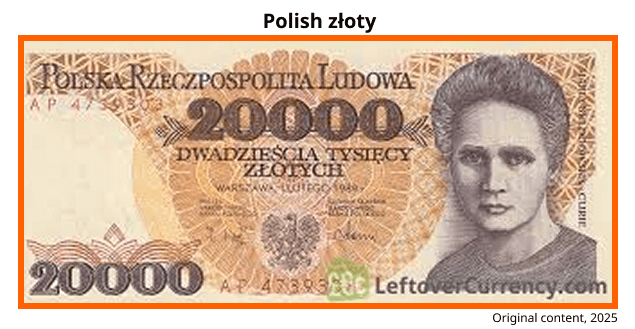
Marie Curie’s appearance on Poland’s former złoty (PLN) illustrates how science itself becomes a cultural symbol. In the UAE, the 100-dirham (AED) note shows Abu Dhabi’s World Trade Center, emphasizing its rapid modernization over the last few decades.
Universities, laboratories, satellites, modern bridges, or high-tech transport systems often appear as visual metaphors of development. In this way, currency also acts as a form of nation branding; a way for countries to show their energy, creativity, and identity to the world.
Art and architecture: aesthetics, tradition, and a distinctive style
Art and architecture are also among the most recognizable symbolic images on money. From classical sculptures to modern landmarks, these designs highlight the cultural touchstones each country is most proud of.
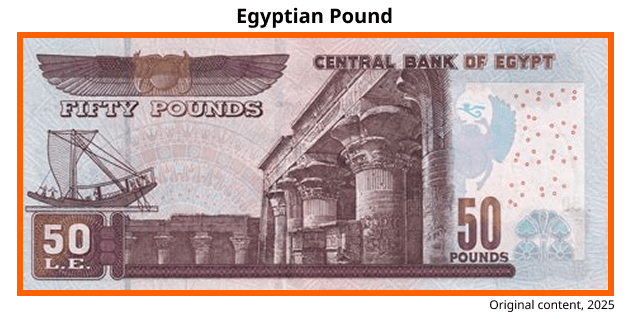
In Europe, many banknotes reflect Renaissance or classical influences. Italy’s 1-euro coin, for instance, carries Leonardo da Vinci’s Vitruvian Man. In Egypt, their 50-pound (EGP) banknote depicts the Temple of Edfu, linking present identity to ancient civilizations.
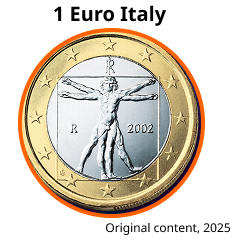
Typography, color palettes, graphic patterns, and composition also carry meaning. Banknotes are essentially miniature works of graphic design, condensing centuries of domestic art, accomplishments, history, and nationalism into a few centimeters of paper.
Unity and identity: inclusion, diversity, and shared values
Money becomes most symbolic when it reflects not just history or geography, but also commemorates who belongs and which values are shared.
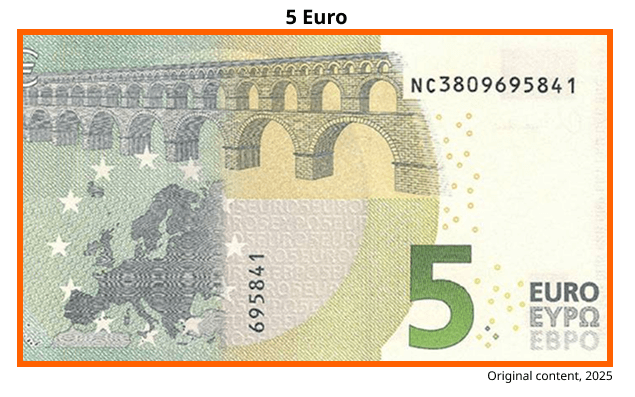
The euro is a powerful example. Its banknotes depict bridges and windows that are not real monuments. This deliberate neutrality avoids favoring any single member state and instead represents European unity. The bridges signify connection, and the windows signify openness and dialogue.
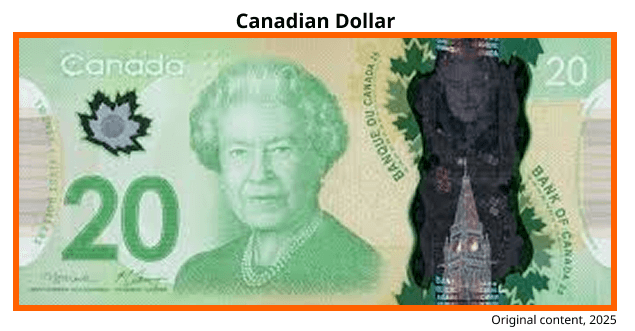
Other currencies reinforce identity through inclusion. Canada’s dollar (CAD) is a great example of this because of its bilingual elements and cultural symbols. The 20-dollar bill shows Queen Elizabeth II together with maple leaves and security patterns inspired by Indigenous artwork, highlighting the country’s multilingual and multicultural identity.
Money becomes a tangible reminder of the values that hold societies together, much like the way people use it to support family abroad and stay connected across distances.
A closer look at the patterns
Now that we have a better understanding of how different countries express their identity through currency design, let’s turn our attention to how these symbolic images are distributed across the globe.
There are more than 180 official currencies worldwide, each with its own visual narrative. However, for this study and attempt to identify comparable patterns, we will focus on the 10 most widely used currencies, that is, those that dominate global foreign-exchange activity and therefore carry their symbolic messages with the greatest cultural and economic reach.
Global distribution of symbolic images and themes
To map these patterns, we examined all symbolic themes present in the current banknote series for ten major currencies.
Instead of assigning each currency a single “dominant” theme, we captured all symbolic dimensions that appear.
Because some currencies integrate multiple layers of meaning, categories may overlap.
Percentages therefore reflect thematic appearances (n = 13), not the number of distinct currencies (n = 10).
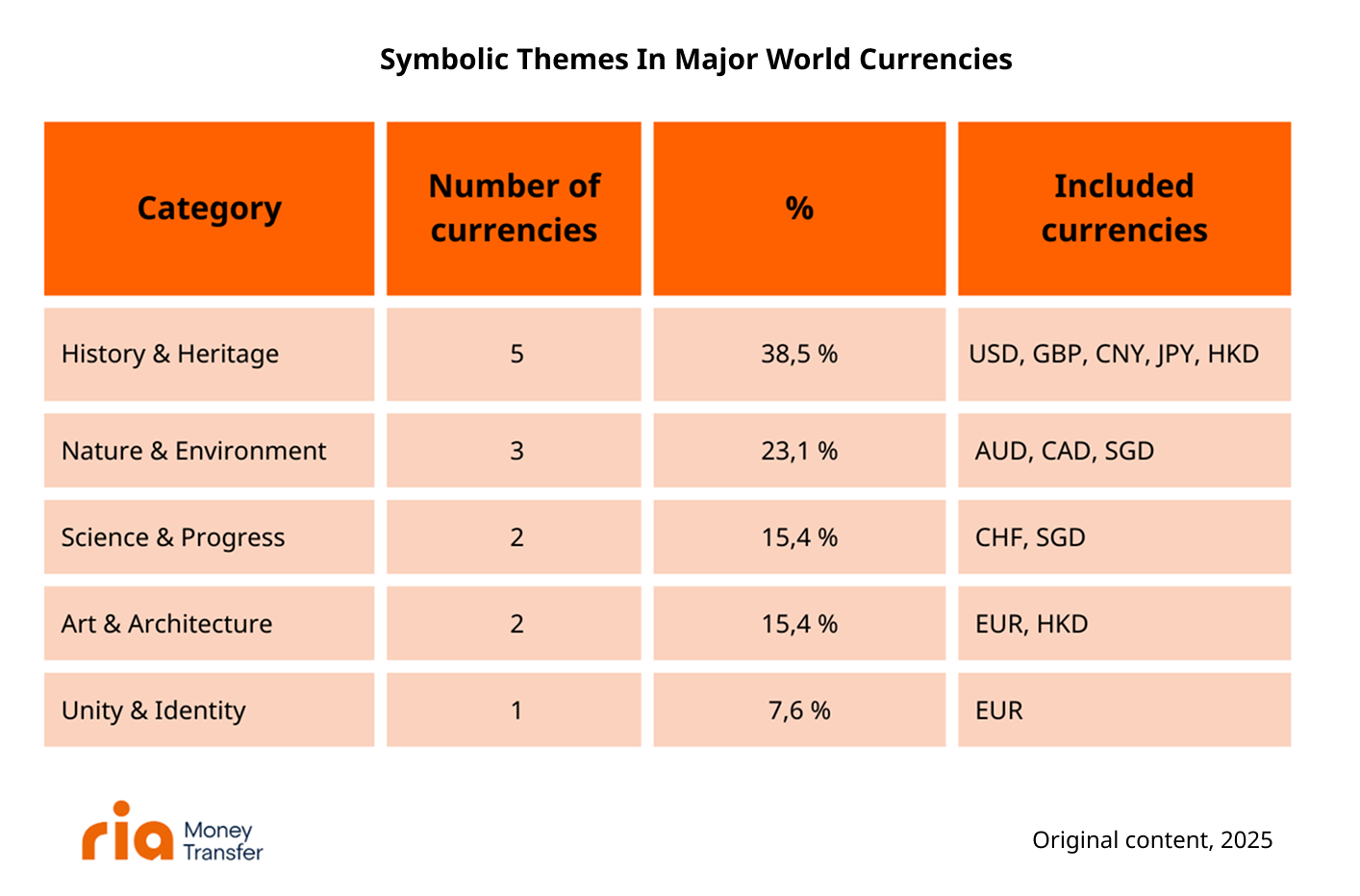
Note: Percentages are based on thematic appearances. Some currencies contribute to more than one category.
38.5% reflect history and heritage
Most currencies highlight national heroes and historical milestones as key markers of identity.
23.1% showcase nature and the environment
Wildlife, flora, and landscapes reinforce each country’s connection to its territory.
15.4% highlight science and progress
Innovation appears on some banknotes, though it remains less common than traditional symbols.
15.4% feature art and architecture
Countries draw on their cultural and aesthetic heritage to express identity through design.
7.6% emphasize unity and shared identity
This symbolic imagery appears in a smaller set of currencies, mainly in supranational cases like the euro.
How symbolism varies around the world
The global distribution shows that, although the symbolic imagery of money is universal, each region combines them differently to express identity.
Below, the perspective widens beyond the Top 10 currencies to reflect patterns found across a broader set of banknotes worldwide, drawing on official designs published by central banks and monetary authorities.
This approach relies on representative samples rather than an exhaustive census, enabling the identification of recurrent symbolic patterns across regions through direct visual observation of their motifs.
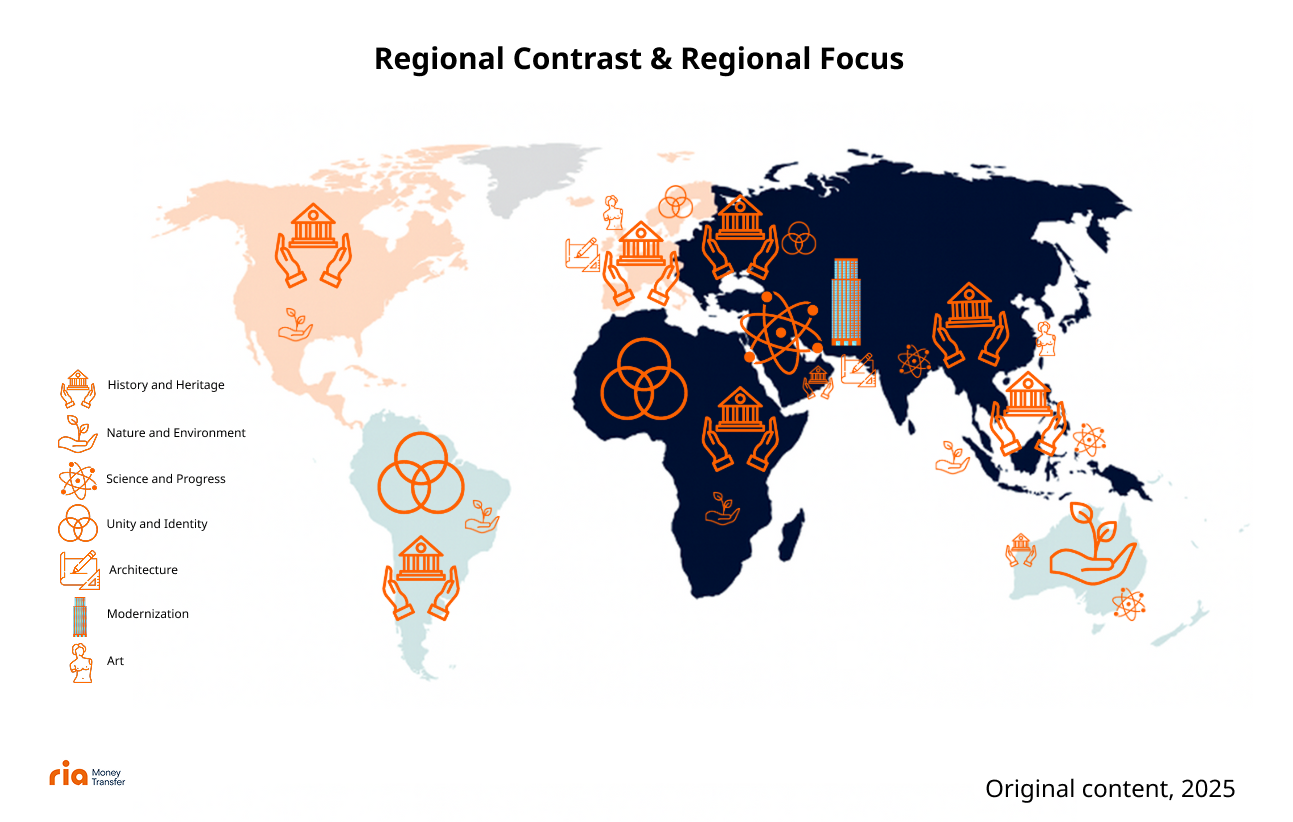
Note: The map uses a representative sample of official banknotes to highlight symbolic patterns, rather than an exhaustive list.
North and Latin America: History is the central thread, with presidents, national heroes, and prominent historical figures, supported by landscapes and wildlife linked to territory.
Western Europe: Heritage coexists with a supranational approach introduced by the Euro, which uses bridges and windows as symbols of unity.
Eastern Europe: Currencies emphasize state identity through leaders, heroes, and national emblems.
Africa: Designs combine post-colonial leadership, cultural diversity, community scenes, and natural elements that highlight ecological richness.
Middle East and Gulf Region: Imagery leans toward modernization, including skyscrapers, infrastructure, and technology, paired with traditional architecture and cultural motifs.
East Asia: Historical and political figures dominate, complemented by science-related motifs and modern infrastructure.
South and Southeast Asia: National heroes, religious symbols, and agricultural or rapidly urbanizing landscapes create a hybrid visual vocabulary.
Oceania: A distinct naturalistic focus, centered on native animals, flora, and ecosystems, often paired with historical or scientific references.
Taken together, these regional patterns show that currency design is not random, but reflects how each society chooses to present itself to the global society.
The Meaning Behind the Money We Send
These findings highlight the simple idea that money communicates cultural meaning as much as economic value. It reflects what countries choose to remember, promote, or share with the world.
For Ria Money Transfer, this perspective connects directly to our role. Every transfer links people across borders, and understanding the symbolic imagery of money reinforces why those connections matter. The way nations represent themselves through their currencies mirrors the same diversity and cultural richness we see every day in the communities we serve.

About the author

Gabriela Solis
Gabriela Solis is Ria's Senior Content Writer. Located in Querétaro, México, she focuses on telling stories that show the myriad human faces of remittances.
Related posts

Living in Japan as a Foreigner: How to Read the Room and Feel at Home
Japan always leaves a strong impression on those who visit the country. Its cities are clean and efficient, public transport is known to be reliable, and everyday life often feels remarkably organized. These factors make it easy to understand why so many people choose moving to Japan as a foreigner: to live, work or study
From Dance to Values: Uncovering the Full Iceberg of Culture
Are you familiar with the “Iceberg of Culture”? Developed by anthropologist Edward T. Hall, it shows that culture goes far beyond what we can see, shaped as much by visible expressions as by deeper, often invisible elements. On World Day for Cultural Diversity, we’re exploring both sides of that iceberg. From language and dance to []
International Dance Day: How Movement Connects Cultures
Dance is a timeless art expressed through movement. It has been used by humanity for millennia to convey meaning and emotions. To this day, dances hold memories and wisdom from ancestral times. They’re a powerful marker of identity that transcends borders and ages, bringing cultures together. That is why many migrants use dance as way []
We Folded One Thousand Cranes for Children
Key Takeaways ▪ Senbazuru is a Japanese tradition of folding 1,000 paper cranes to express hope, healing, or peace.▪ The paper crane symbolizes long life and resilience in Japanese folklore.▪ Sadako Sasaki, a Hiroshima bombing survivor, made the tradition globally known while battling leukemia.▪ Her story turned the paper crane into an international symbol of []