

Bre-B vs. bank transfer for receiving remittances in Colombia


When family in the U.S. sends you money, the last screen of the transfer asks a very practical question: where should the money land? For years, the answer in Colombia was a bank account number. Now there’s a second route. With Bre-B, your sender types in your llave (key) and the pesos show up in your account in minutes.
Both options put money in an account in your name. They differ in what you share with your sender, how fast the transfer arrives and what happens when someone sends money on a Sunday night or a holiday Monday. Here’s how Bre-B and a traditional bank transfer compare when you’re the one receiving.
Bre-B vs. bank transfer: What’s the difference?
Both routes end in the same place: a Colombian bank account or digital wallet in your name. What changes is the detail your sender uses to find you and the way the money travels on its last stretch inside Colombia.
Bank transfer (bank deposit): your sender chooses your bank and enters your account number and personal details.
Bre-B: your sender enters one llave, such as your cell phone number or ID number, and the money moves through Colombia’s instant payment system, run by Banco de la República.
Either way, Ria takes care of the international part of the trip and converts your sender’s dollars into pesos. The difference is how the pesos reach you.
Have family in the U.S.? They can send money to your Bre-B key or your account number with Ria. See how Bre-B transfers work with Ria.
When Bre-B makes more sense
Bre-B is a good fit when:
You need the money quickly, for an urgent bill or a medical expense
Your family tends to send money on weekends or holidays
You use Nequi, Daviplata or another wallet day to day
You’d rather not share your account number
The amounts are smaller and fall within the Bre-B limit
Most major banks and wallets in Colombia take part in Bre-B. You can check the list in our post on which banks and wallets support Bre-B.


When a bank transfer is the better pick
A traditional bank deposit can work better when:
The amount is above the Bre-B ceiling or your bank’s lower cap
You haven’t registered a key yet, or your bank or cooperative doesn’t take part in Bre-B
You recently changed your phone number and haven’t updated the key linked to it
Your sender already has your account details saved and the timing isn’t urgent
And if you don’t have an account at all, cash pickup is still an option when your family sends money with Ria.
How a bank transfer works for receiving remittances
This is the option most families already know. Your sender selects bank deposit, picks your bank and fills in your details. Ria works with major Colombian banks, so you can receive money straight into accounts at banks like Bancolombia or Davivienda.
Usually, your sender needs:
Your full name as it appears on the account
Your bank’s name
Your account number and account type (savings or checking)
Any other recipient details the Ria form asks for
Anyone in your family who has sent you money before probably has your account details saved, and your account number doesn’t change when you switch phones.
Bank deposits typically take longer than other delivery methods, and transfers sent on weekends, on holidays or after banking hours may arrive later. Long account numbers also leave more room for a mistyped digit, which can mean a delayed transfer and a few extra messages back and forth.
How Bre-B works for receiving remittances
Bre-B went into full operation on October 6, 2025. Instead of handing out your account number, you register a llave in the app of your bank or wallet and share that. If you want the full background, start with our guide to what Bre-B is and how it works.
You can register these types of keys:
Your national ID number (cédula)
Your Colombian cell phone number
Your email address
An alphanumeric code generated by your bank, which starts with @
A few things to know before your family hits send:
Anyone can send money through Bre-B, but you need a key to receive. Registering one is free and happens inside your bank’s app.
The same key can’t be registered at two institutions at once. If your phone number is already your key at one bank, pick a different key at the other.
You don’t have to accept anything. Once the transfer is processed, the money goes into the account linked to your key automatically.
Not sure which key you have or where to find it? Our guide on how to find your Bre-B key walks you through it.
On your sender’s side, it takes a few taps in the Ria app: choose Colombia, enter the amount, pick Bre-B as the delivery method and type in your key.
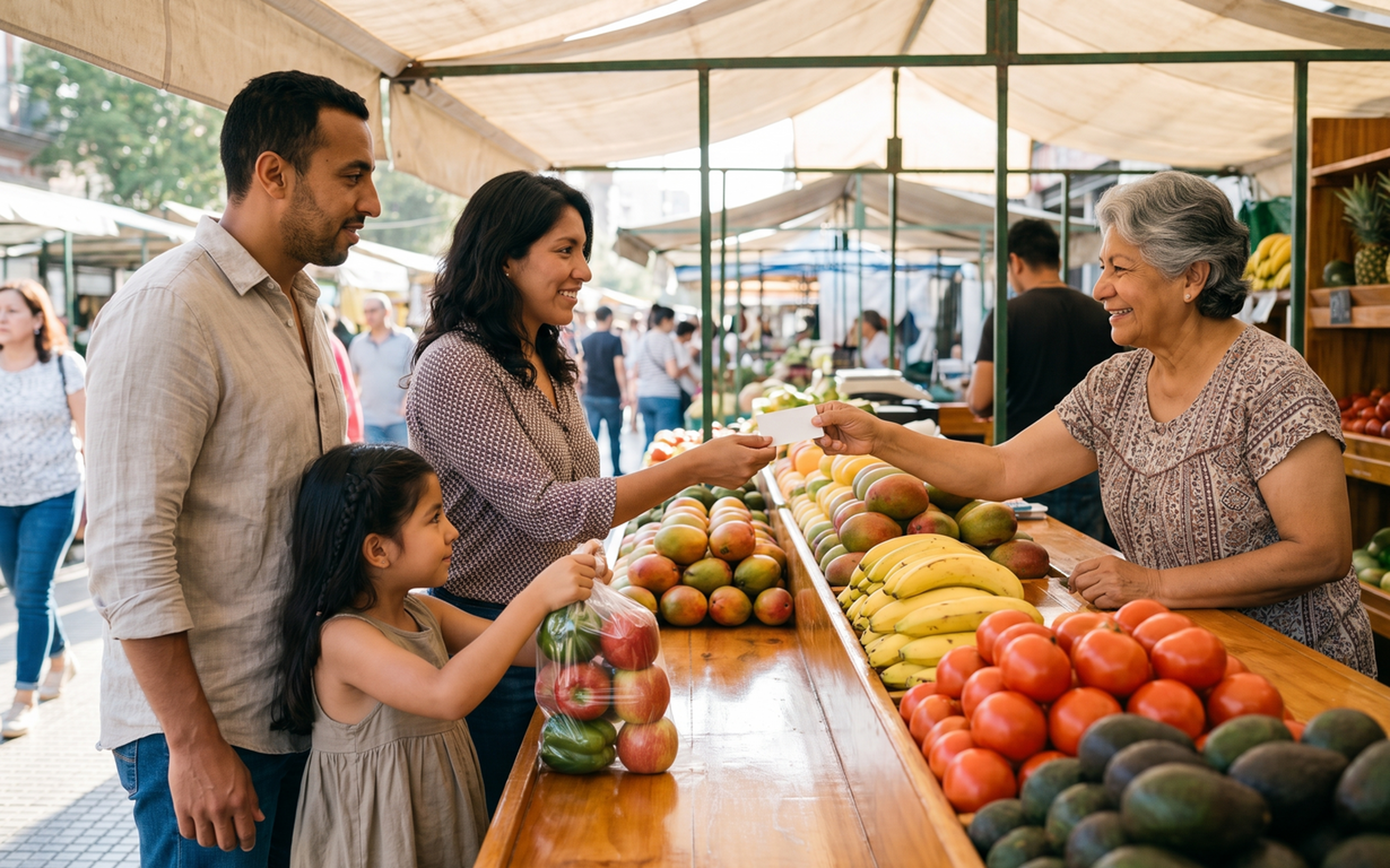

Bre-B and bank transfers side by side
Here’s a quick look at how the two options compare when money comes from the U.S. with Ria:
Bre-B | Bank transfer (bank deposit) | |
|---|---|---|
What you share | One llave (phone, cédula, email or @ code) | Bank name, account number, account type and personal details |
Where the money lands | The bank account or digital wallet linked to your key | The bank account your sender entered |
Delivery time with Ria | Minutes | May be longer depending on the bank; can stretch after banking hours or on weekends |
Availability | 24 hours a day, 7 days a week, holidays included | Depends on the bank and banking hours |
Limits | COP 12,110,000 per transaction in 2026; banks can set lower caps | Ria shows the limits before your sender confirms |
Fees on your side | Each institution sets its own Bre-B fees | Your bank’s usual terms apply |
Room for typos | One short detail to check | A long number with more room for mistakes |
Speed and timing
Speed is where the two options differ most. Money sent with Ria through Bre-B arrives in minutes, and the system runs 24 hours a day, 7 days a week, 365 days a year. If your sender gets paid on Friday and sends money on Saturday morning, it can be in your account the same day.
Bank deposits work on a different rhythm. They may take longer, and a transfer sent on a weekend, on a Colombian holiday or late in the evening could wait for the next banking day.
How your sender pays matters too, whichever option you choose. Debit card payments tend to process faster than payments from a U.S. bank account through the Automated Clearing House (ACH). Ria shows the estimated delivery time before your sender confirms the transfer.
Limits
Bre-B has a ceiling on each transaction:
COP 12,110,000 per transaction in 2026, equal to 1,000 UVB (Unidad de Valor Básico, a unit the central bank uses to index limits)
The peso figure is updated every year
Your bank or wallet can set lower caps on the amount or the number of transactions
If your family sends a larger amount, for example for school fees or a down payment, a bank deposit may be the simpler route. Ria shows your sender the limits for each delivery method when they set up the transfer.
Fees
Your sender sees Ria’s fee and exchange rate before confirming, whether they choose Bre-B or a bank deposit. On your side, each financial institution sets its own fees for Bre-B transfers, and your bank’s usual terms apply to deposits. If you’re unsure, check the fee schedule in your bank or wallet app.
Mistakes and security
A phone number or cédula is much shorter than an account number, so it’s easier to read back and check. That doesn’t make Bre-B foolproof. A typo in a key can send the money to whoever owns that key, so ask your sender to copy and paste it and check each character before confirming.
Bre-B is overseen by Banco de la República and the Superintendencia Financiera de Colombia (Colombia’s Financial Superintendence). Banco de la República has also warned about scams, including text messages with links to fake pages. A few habits help:
Register and manage your key only inside your bank’s official app
Share your key, never your passwords, PINs or verification codes
Treat anyone asking for money to “activate” your key as a red flag, since registering is free


Do you have to choose just one?
No. Bre-B doesn’t replace your account number, and traditional transfers still exist. You can keep both options open and let your sender pick what fits each transfer, for example a bank deposit for a larger monthly amount and Bre-B for the in-between needs.
Bre-B is also handy after a deposit lands. Once the money is in your account, you can use your bank’s Bre-B option to move it to another bank or wallet or pay someone, any time of day (check your institution’s fees).
Ready to get your money your way? Share your Bre-B key or your account details with your family in the U.S., and they can send money to Colombia with Ria in a few taps.
FAQs
Is Bre-B faster than a bank transfer?
Usually, yes. Money sent with Ria through Bre-B arrives in minutes, any day of the year. Bank deposits typically take longer, especially when they’re sent after banking hours, on weekends or on holidays. Ria shows the estimated delivery time before your sender confirms.
Do I need a bank account to receive money through Bre-B?
Yes. You need a savings account, checking account or low-amount deposit (the kind of account behind most digital wallets) at a Colombian institution that takes part in Bre-B, plus a key registered to it.
Can I receive money from the U.S. through Bre-B in Nequi or Daviplata?
Yes. Both take part in Bre-B. Register your key in the Nequi or Daviplata app and share it with your sender.
What's the most I can receive through Bre-B?
Bre-B’s ceiling is COP 12,110,000 per transaction in 2026. Your bank can set a lower limit, and Ria shows your sender the exact limits when they set up the transfer.
Will my account number stop working if I register a Bre-B key?
No. Your account, card and login stay the same. Bre-B adds another way to receive money, and your family can keep sending bank deposits to your account number.
What happens if my sender types the wrong key?
The money can go to whoever owns that key. Ask your sender to copy and paste your key and check it before confirming. If something looks off, they can contact the Ria Help Center, and you can reach your bank through its official support channels.
About the author

Ignacia Córdova
Ignacia Córdova is Ria's Content Specialist, based in Santiago, Chile. She loves turning everyday moments into stories worth sharing, one post at a time.
Related posts


Ria payment methods: All the ways to pay for a transfer online
Bank account, debit card, credit card, Google Pay, Apple Pay or cash: here's how each way to pay for a Ria transfer works and which one fits your needs.


How to receive money from the US via Bre-B
Getting money from family in the U.S.? Here's how to set up your Bre-B key, what to send the person paying, how long transfers take, and what to do if money doesn't show up.

Ria transfer limits to Mexico: How much can you send in 2026?
How much can you send to Mexico from the U.S. with Ria? See limits by payment method and state, the 1% tax on cash transfers and how to send more.


How to send money on WhatsApp with Ria: Your complete guide
Everything you need to send money with Ria on WhatsApp: what to have ready, transfer limits, payment, delivery options and how the chat works from start to finish.