)
)
How to Send Money to Venezuela in 2026
)
)
In the wake of the recent earthquakes in Venezuela, we want to make it as easy as possible for you to be there for your loved ones. We’ve temporarily removed all transfer fees to Venezuela, and we’ve put together a guide to trusted relief organizations and resources for those who want to help. Read the guide.
Remittances have become an important economic lifeline for many Venezuelan households amid ongoing economic challenges and political transitions in the country.
Venezuela receives approximately $5 billion in annual remittances. These funds are largely sent from the United States, where the number of Venezuelans has more than doubled in the last five years, reaching about 1.2 million in 2024. That means nearly 640,000 more people than in 2019, a growth of almost 120%.
Recent shifts in Venezuela’s political landscape continue to influence how remittances flow and how households rely on them for daily expenses. This guide walks you through everything you need to know to send money to Venezuela, including costs, transfer speeds, and tips for choosing the right option.

Ways to Send Money to Venezuela
The financial infrastructure for sending money to Venezuela has evolved. Today, digital platforms and money transfer companies often provide the best balance of speed, cost, and reliability.
Money Transfer Services
Specialized money transfer companies like Ria Money Transfer are often the most practical choice for sending remittances to Venezuela. These services are designed specifically for cross-border payments and understand the local banking environment. They typically offer two main delivery methods:
▪ Bank Deposit: Funds are transferred directly into your recipient’s bank account in Venezuela. This is convenient for recipients who prefer not to carry cash.
▪ Cash Pickup: Your recipient visits a local branch or partner location to collect the money in cash. This is a crucial option when immediate access to physical currency is required.
Bank-to-Bank Wire Transfers
You can use your local bank to wire funds to a Venezuelan bank account. However, this method often comes with significant drawbacks. Traditional banks may charge high fixed fees for international swift transfers. Furthermore, due to compliance checks and intermediary banks, these transfers can take several days or even weeks to clear. For urgent needs, this is rarely the most efficient route.
Digital Wallets and Cryptocurrency
In recent years, digital wallets and cryptocurrencies have gained traction as alternative ways to move value across borders. While these offer speed, they often require technical knowledge from both the sender and the recipient. Additionally, converting digital assets back into local currency for daily spending can involve extra steps and fees, making it less accessible for some recipients.

How Much Does It Cost to Send Money to Venezuela?
Understanding the total cost of your transfer is essential. The price you pay is usually a combination of two factors: the transfer fee and the exchange rate.
Transfer Fees
This is the upfront cost charged by the service provider to process your transaction. Fees can vary depending on:
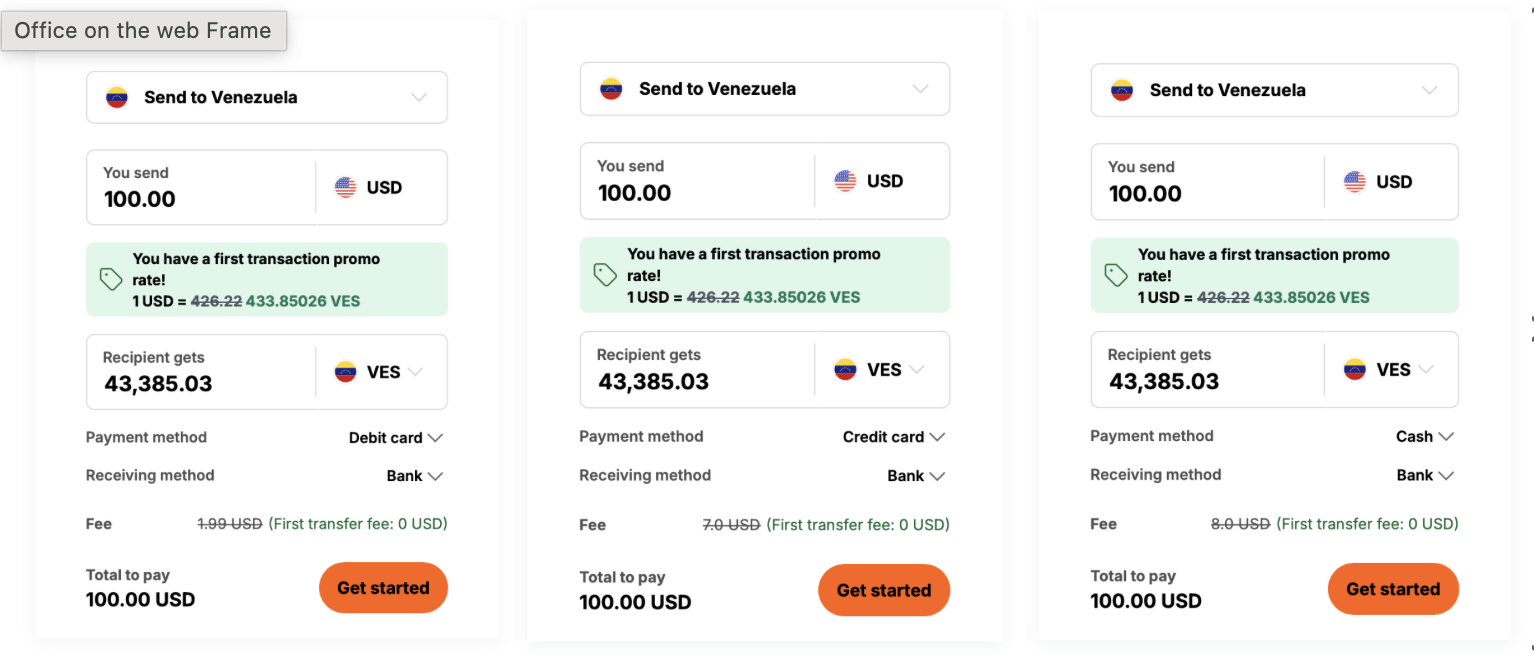
▪ Payment method: Paying with a credit card often incurs higher fees than paying with a debit card or bank account.
▪ Delivery method: Cash pickup and bank deposits may have different fee structures.
▪ Amount sent: Some providers charge a percentage of the total amount, while others offer a flat fee.
Example Cost Comparison:
Exchange Rates
The exchange rate is the value of one currency for the purpose of conversion to another. When sending to Venezuela, the exchange rate between your currency (such as USD or EUR) and the Venezuelan Bolivar (VES) is critical.
Learn what the best day for a currency transfer is.
How Long Does It Take to Send Money to Venezuela?
Speed is often a deciding factor when sending money for groceries or emergencies. The timing depends largely on the method you choose.
Method | Typical Delivery Time |
Debit/Credit Card Funding | Minutes to a few hours |
Bank Wire Transfer | 3–5 business days |
Usually within minutes | |
Cash Pickup | Often available immediately at the agent once processed |
Step-by-Step Guide to Sending Money to Venezuela with Ria
Ria Money Transfer is a trusted choice to send money to Venezuela, offering a secure network and transparent pricing. Here is how you can complete a transfer.
1. Sign Up for an Account
▪ Go to the Ria Money Transfer website or download the Ria app.
▪ Create an account using your email address, and set a secure password.
▪ You may need to verify your identity by uploading a valid ID, especially for higher transfer amounts.
2. Begin a New Transfer
▪ Click “Send Money” and select Venezuela as the destination.
▪ Enter the amount you’re sending in either USD or VES.
3. Choose a Delivery Method
▪ Bank Transfer: Send funds directly to the recipient’s account.
▪ Cash Pickup: Recipients can collect cash from thousands of Ria agent locations across Peru.
▪ Digital Wallet
4. Enter Recipient Information
▪ For bank deposits: Provide the recipient’s account number, bank name (such as Banesco, Banco de Venezuela), and full name as it appears on official documents.
▪ For cash pickup: Enter the recipient’s full name accurately to match their ID.
5. Select a Payment Method
▪ Pay via bank transfer, debit card, or credit card.
▪ Bank transfers tend to have the lowest fees, while credit cards may incur higher costs for faster payments.
6. Review & Confirm
▪ Double-check all details:
▪ Transfer amount.
▪ Fees and exchange rates.
▪ Recipient information.
▪ Confirm the transfer and submit your payment.
7. Track Your Transfer
▪ You’ll receive a tracking PIN to monitor the status of your transfer.
▪ For cash pickups, share this PIN with your recipient.
8. Notify the Recipient
▪ Ensure your recipient knows where and when to collect their funds.
▪ For cash pickups, they must present their ID and the tracking PIN at designated locations.
FAQs About Sending Money to Venezuela
Is it safe to send money to Venezuela online?
Yes. Using regulated providers like Ria means your transfer is protected with secure encryption and compliance practices, giving you peace of mind when sending internationally.
What is the cheapest way to send money to Venezuela?
Typically, sending online and funding the transfer with a bank account or debit card lowers fees compared to credit cards. Using direct deposit methods like Pago Móvil can also be efficient and fast.
Can I send money to a debit card in Venezuela?
Supported delivery options depend on the provider. Ria supports bank deposit and Pago Móvil payouts, which directly credit a recipient’s Venezuelan bank account — a common and secure method.
How much money can I send to Venezuela at once through Ria?
You’ll see your specific transfer limits during the setup process, but these are Ria’s typical limits:
▪ Cash-funded transfers: USD $495.00 per transfer
▪ All other payment methods: Up to USD $14,999.99 every 30 days
Send Money to Venezuela with Ria
Ria’s extensive network throughout Venezuela, competitive rates, and multiple payout options ensure your money reaches its destination safely and quickly.
Send money to Venezuela today and experience the peace of mind that comes with trusted, reliable service.

About the author

Gabriela Solis
Gabriela Solis is Ria's Senior Content Writer. Located in Querétaro, México, she focuses on telling stories that show the myriad human faces of remittances.
Related posts

How to send money on WhatsApp with Ria: Your complete guide
Everything you need to send money with Ria on WhatsApp: what to have ready, transfer limits, payment, delivery options and how the chat works from start to finish.

What is Bre-B and how does it work?
Bre-B is Colombia's instant payment system. Learn how llaves work, what Bre-B costs, its transfer limits, and how to send money to a Bre-B key from abroad with Ria.

The Money That Moves the World Is Personal
200 million people built one of the world's most powerful financial systems, but few call it that.
Colombia Earthquake (2026): How to Help, Find Relief Resources, and Send Money
On the morning of August 10th, a 7.4-magnitude earthquake struck western Colombia. Ria is waiving transfer fees to Colombia through August 16.