)
)
Where $100 Goes Furthest
)
)
What can you buy with $100? The answer depends on the country. In some places, $100 is more than enough for a cart full of groceries at the store and then some. In other countries, your dollar won’t stretch nearly as far.
This study compares how far $100 goes depending on your location and country using real prices for everyday essentials, such as milk, bottled water, and potatoes. It’s a simple yet fascinating way to see how the cost of living changes from one place to another.
On a daily basis at Ria Money Transfer, we see how money sent abroad can make a real difference in people’s lives. That’s why we wanted to look beyond exchange rates and explore how far that money can actually go once it reaches various countries.
What $100 can buy around the world
This analysis focuses on three everyday essentials: potatoes, milk, and bottled water, to show in concrete terms how prices and the cost of covering basic needs vary from country to country.
Original prices were collected in liters and kilograms and then converted into gallons and pounds to make the comparisons clearer and easier to follow.
Potatoes: big differences in a basic food staple
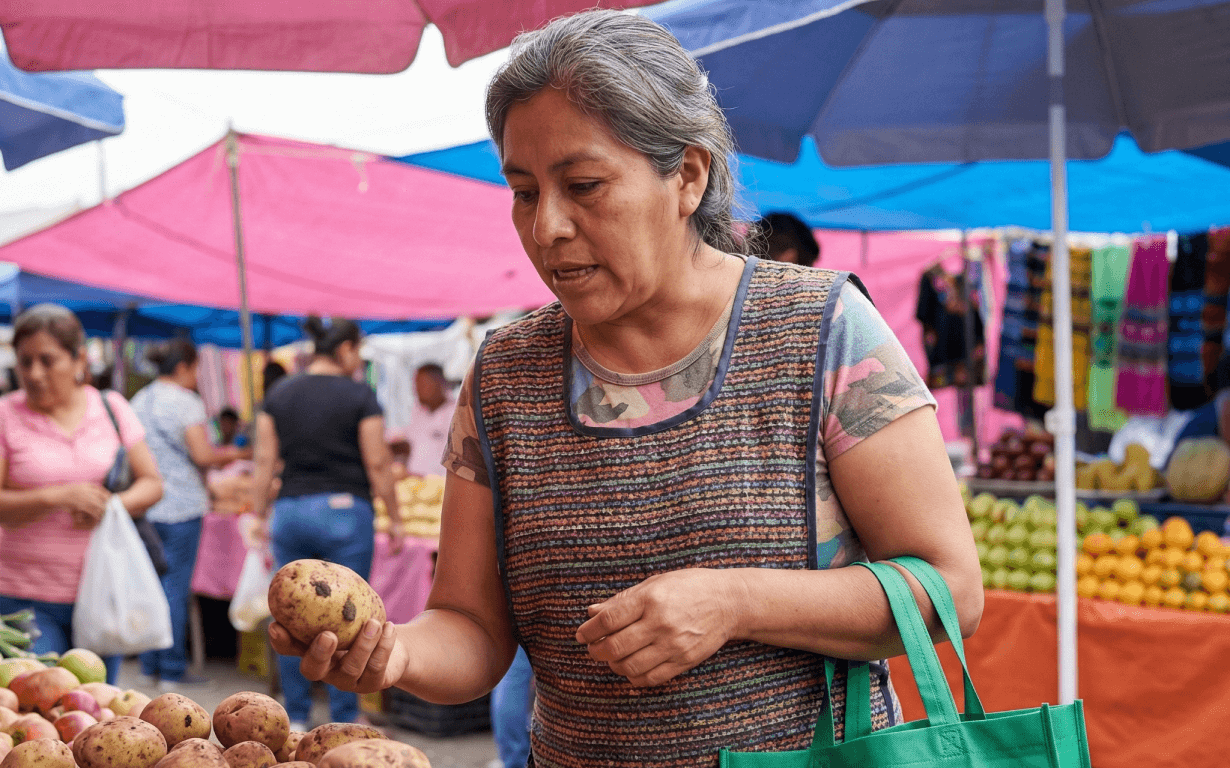
Potatoes are one of the most common foods in many diets and a good starting point for comparing the cost of living.
Top 5 – Countries where $100 buys the most potatoes
Bangladesh tops the ranking. With $100, you can buy nearly 700 pounds of potatoes. Pakistan, Nepal, and India also rank among the countries where this product is most affordable, reflecting generally lower food costs.
Bottom 5 – Countries where $100 buys the fewest potatoes
At the other end of the spectrum are countries such as South Korea, Costa Rica, and the United States. In the United States, for example, $100 buys around 75 pounds of potatoes, nearly ten times less than in the countries where potatoes are cheapest.
Milk: from affordable staple to costly product
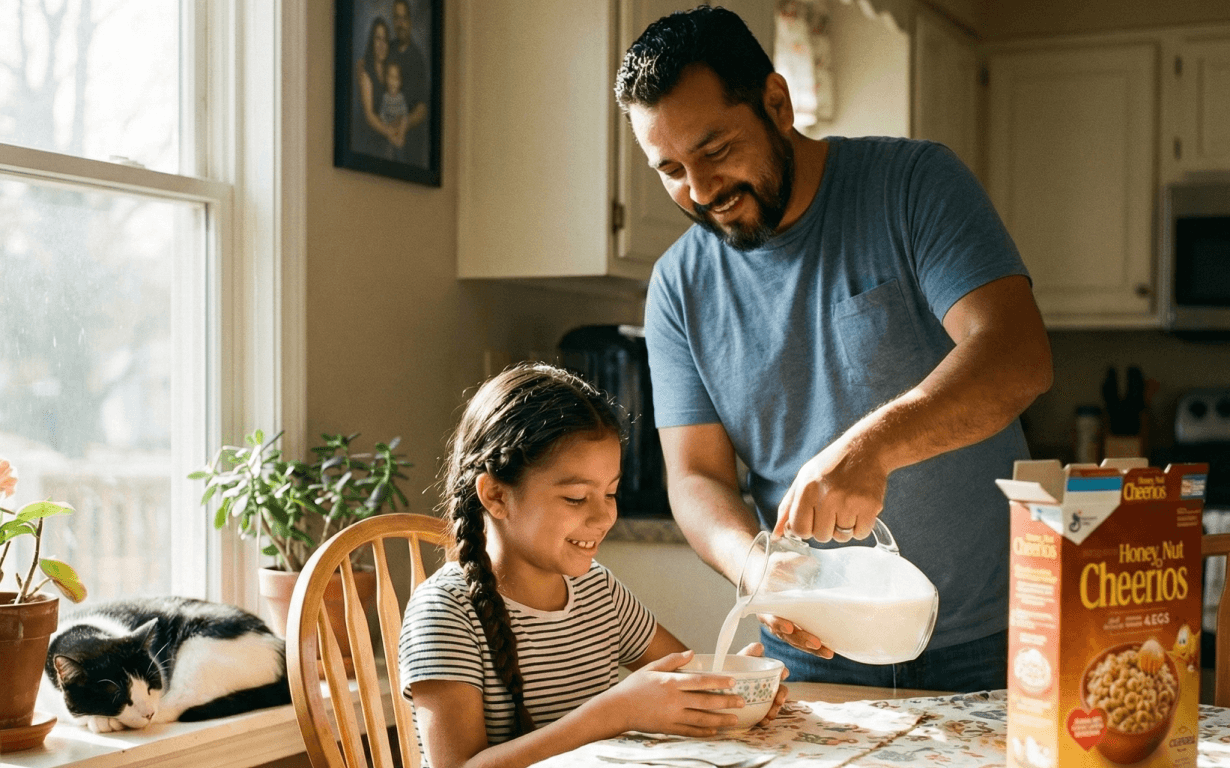
Milk is another essential product that reflects everyday living costs.
Top 5 – Countries where $100 buys the most milk
Tunisia leads the ranking, where $100 buys more than 50 gallons of milk. Iran, India, and Nepal also show relatively low prices compared to other markets.
Bottom 5 – Countries where $100 buys the least amount of milk
By contrast, places such as Hong Kong, Singapore, and Taiwan rank among the most expensive for milk. In Hong Kong, for example, $100 buys barely 8 gallons, a striking difference compared to the countries at the other end of the spectrum.
Bottled water: from hundreds of bottles to just a few
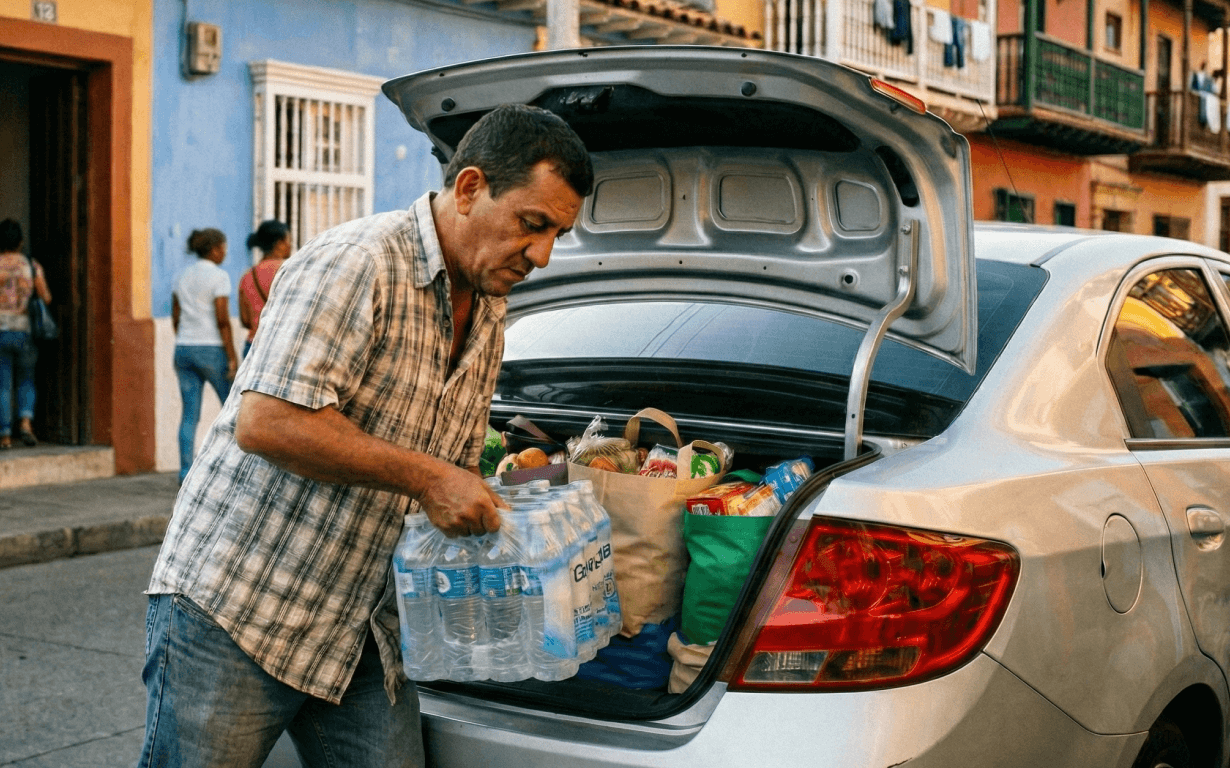
Bottled water is one of the best indicators to compare, as it is consumed worldwide and its price varies widely by country.
Note: For reference, 50.7 fl oz is roughly equivalent to three 16.9 fl oz bottles. The original data is based on 1.5-liter bottles.
Top 5 – Countries where $100 buys the most bottled water
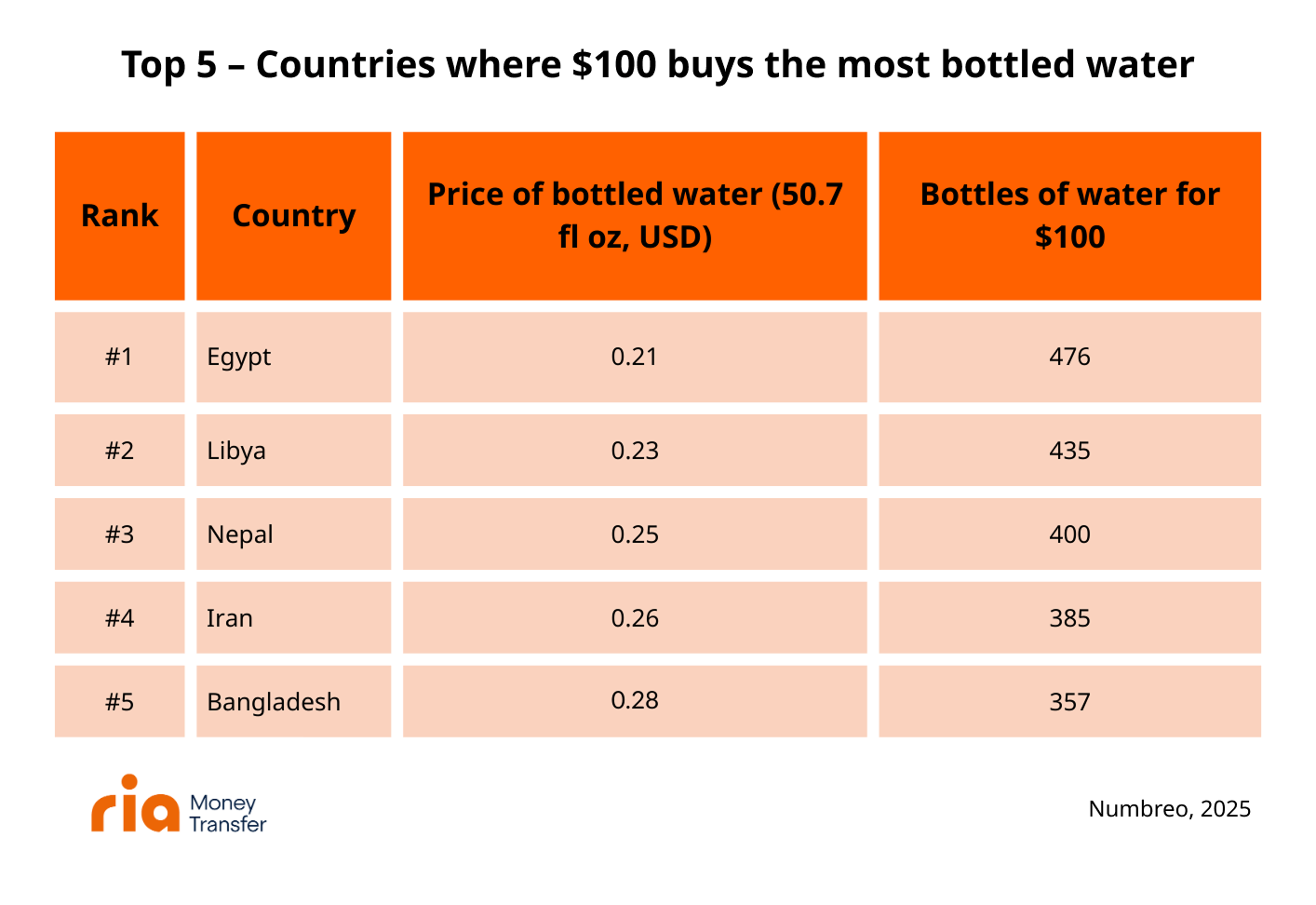
Egypt ranks first. With $100, you can buy nearly 500 bottles of water. Libya, Nepal, and Iran also rank among the countries where bottled water is cheapest.
Bottom 5 – Countries where $100 buys the least amount of bottled water
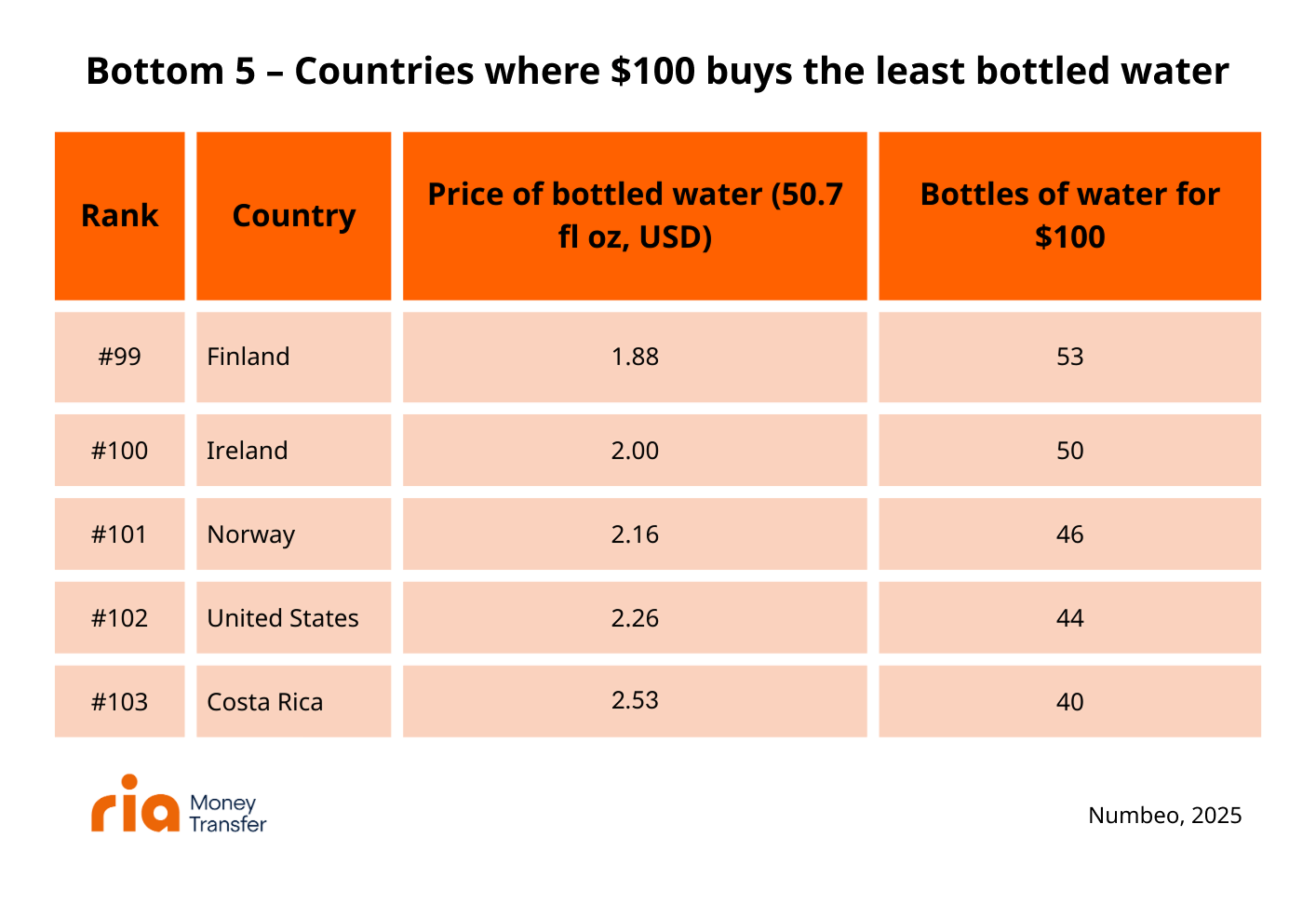
At the other end of the bottled water spectrum are countries such as Costa Rica, the United States, and Norway. In the United States, $100 buys just over 40 bottles, far fewer than in lower-cost countries.
How the impact of remittances change by product
These differences in the cost of basic goods are especially relevant in major remittance corridors from the United States, such as Mexico, Colombia, India, and the Philippines. However, the data shows that not all products follow the same pattern.
When the US is cheaper: the case of milk
Interestingly enough, when it comes to milk, the United States stands out as one of the more affordable countries. Yes, India remains among the cheapest markets, but $100 still buys more gallons of milk in the United States than in countries such as Mexico, Colombia, or the Philippines.
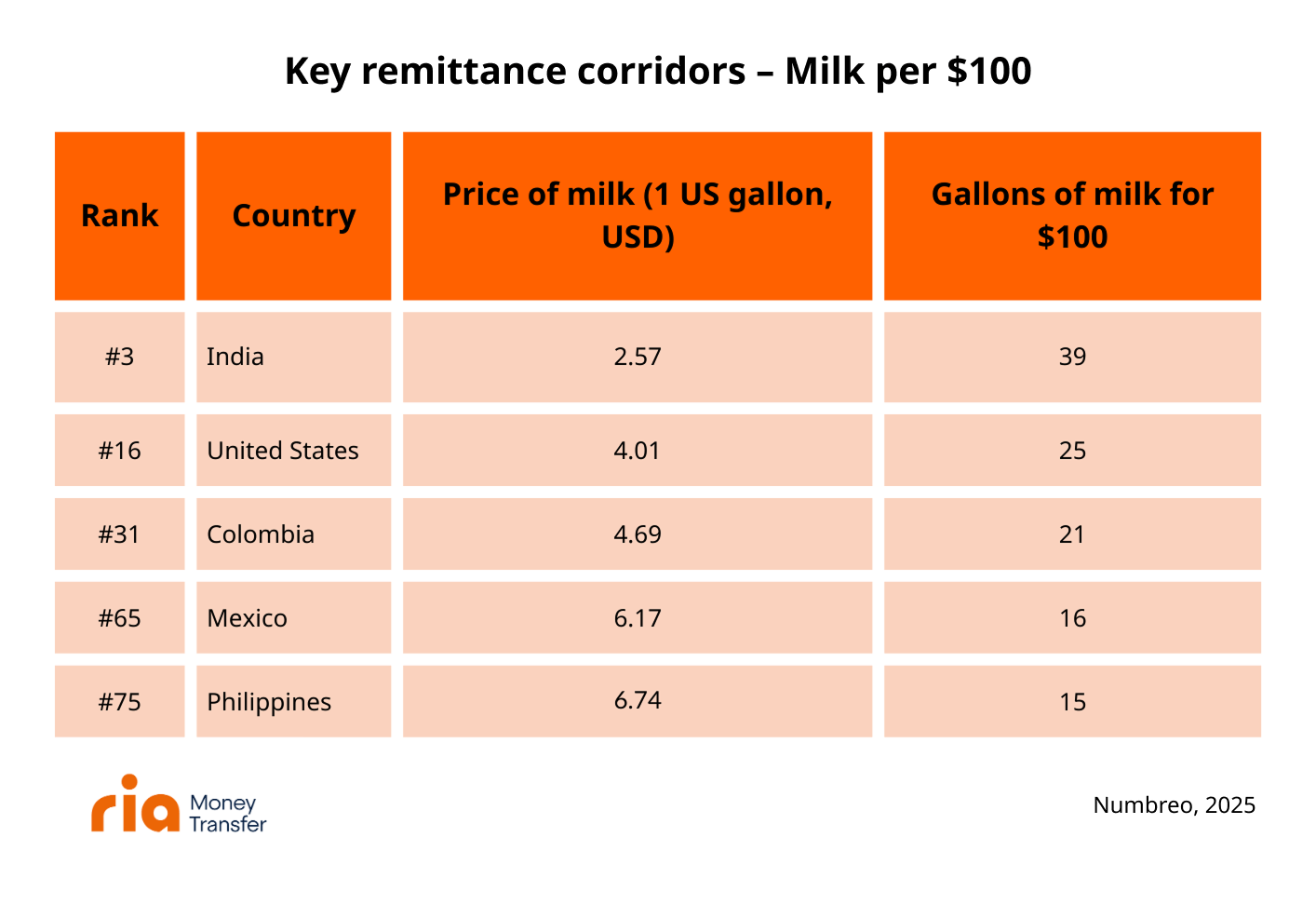
This highlights that even within the same basket of basic goods, prices can vary widely depending on the country and the product. A lower overall cost of living does not necessarily mean lower prices for every item.
Let’s now evaluate items where money goes further outside the US: potatoes and bottled water
The pattern clearly changes when looking at other essentials like potatoes and bottled water. In these cases, the United States ranks among the more expensive countries, while Mexico, Colombia, India and the Philippines allow consumers to buy a much larger quantity with the same $100.
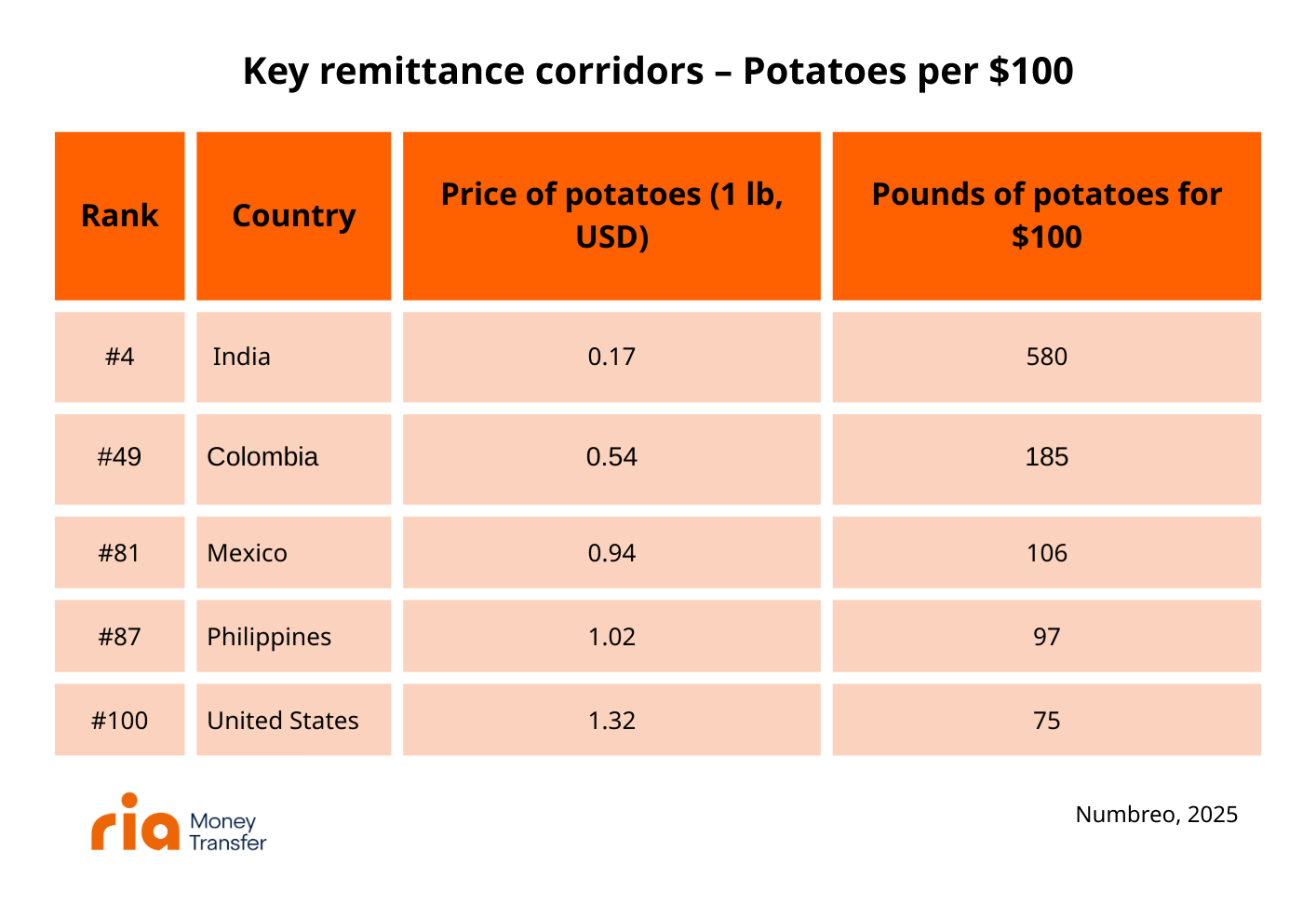
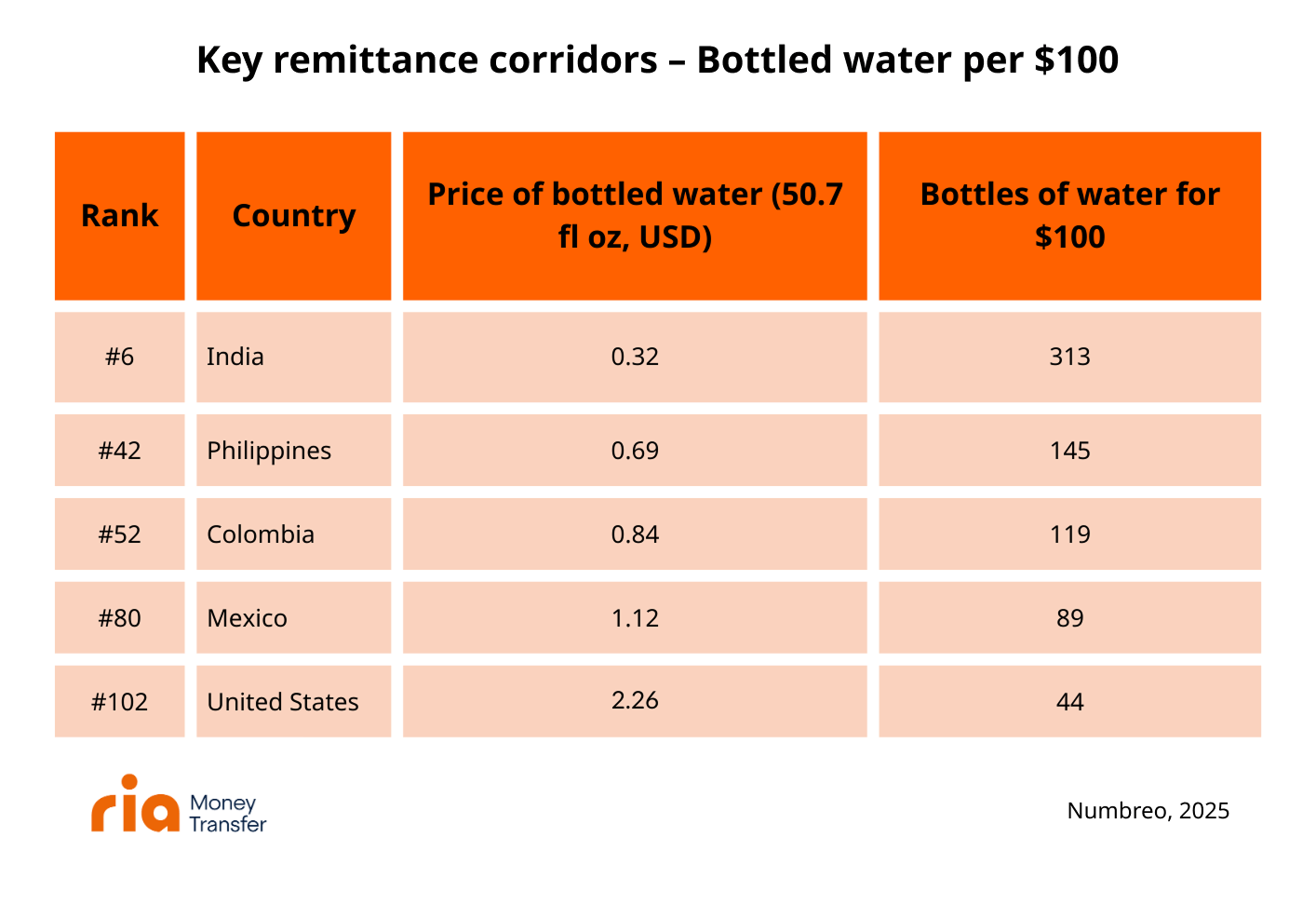
This is where remittances become especially meaningful. In countries with lower costs for these types of products, money sent from the United States can cover more basic needs and have a more direct and tangible impact on the daily lives of the families who receive it.
The cost of living context: what’s behind the prices
Comparing specific products like potatoes, milk, or water helps highlight clear differences between countries, but the cost of living isn’t defined by a single item. It reflects the broader set of prices that affect everyday life such as food, transportation, services, and other basic expenses.
To provide a more complete picture, we use the Price Level Index (World = 100) from the World Bank’s International Comparison Program (ICP). This international benchmark compiles prices for a broad basket of goods and services consumed by households across countries and adjusts them to make fair comparisons possible. The result is an index that shows how expensive (or affordable) it is to live in each country relative to the global average.
– A value below 100 indicates a cost of living lower than the global average.
– A value above 100 indicates a higher-than-average cost of living.
Note: 22 countries and territories are excluded from this ranking due to the lack of comparable data in the World Bank’s International Comparison Program (ICP).
Where the cost of living is lowest (and highest)
Top 5 – Countries with the lowest cost of living
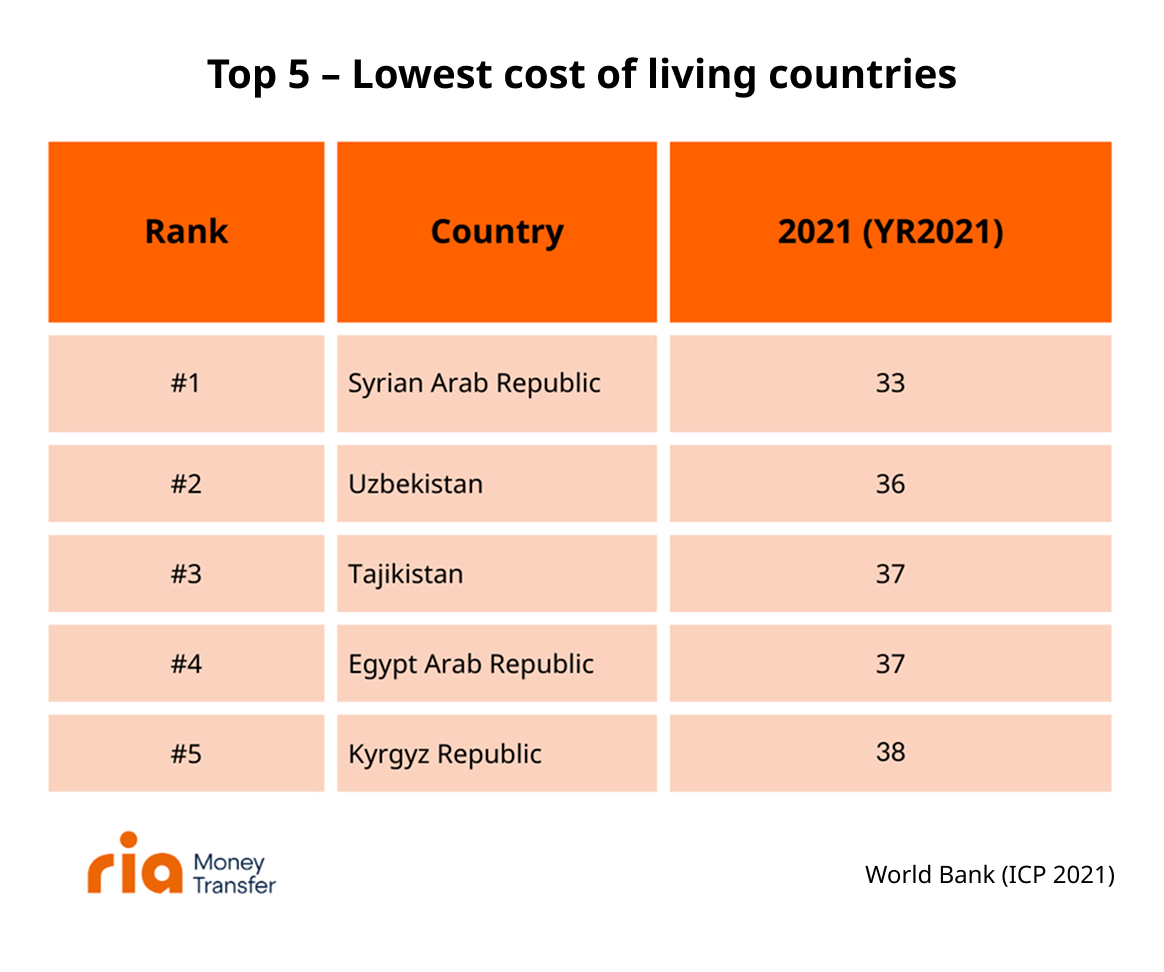
Countries at the top of this ranking have a cost of living well below the global average. This helps explain why, as seen in the product comparisons, basic goods tend to be more affordable.
Bottom 5 – Countries with the highest cost of living
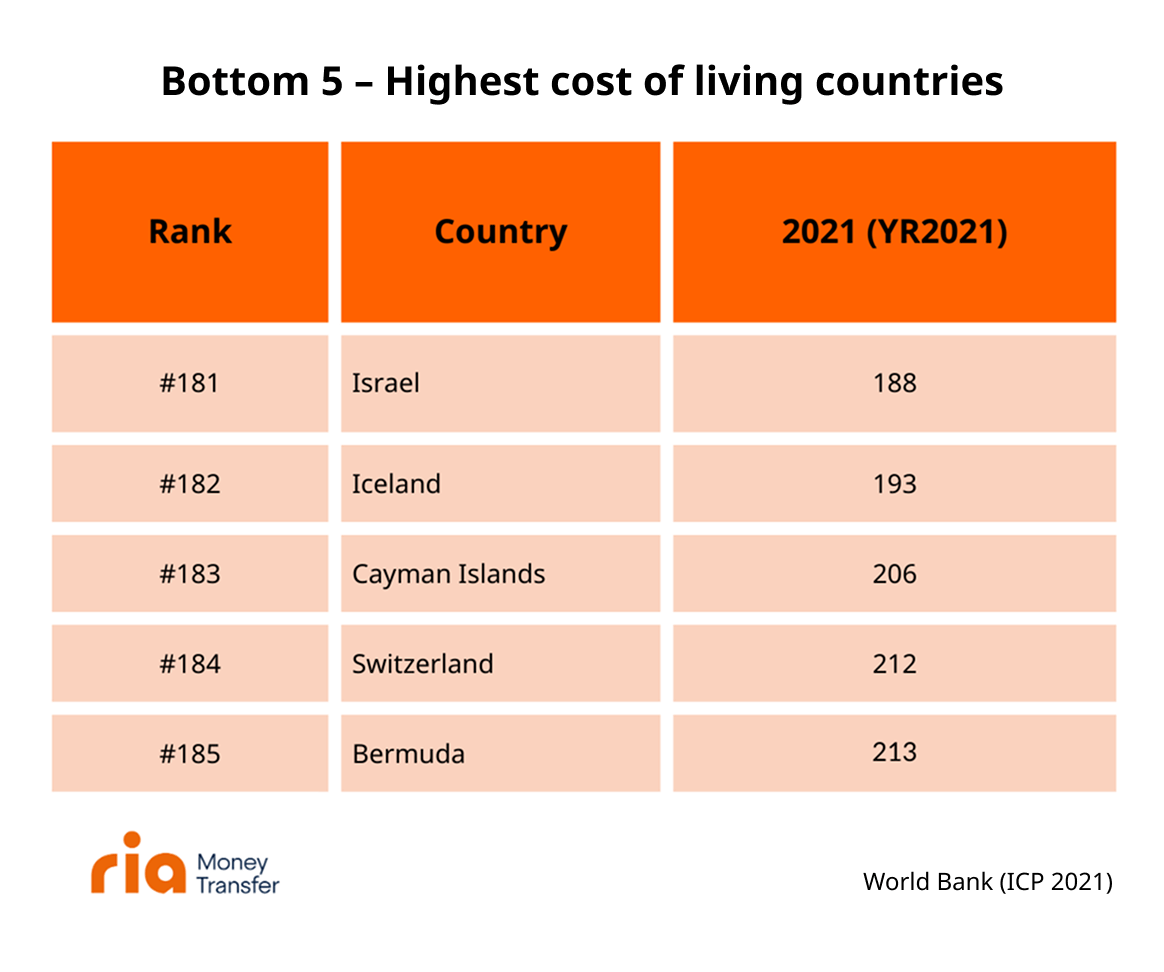
At the other end of the ranking, countries with the highest index values have a significantly higher cost of living. In these markets, everyday expenses (from food to services) tend to be much higher.
How the United States compares with key remittance destinations
The United States ranks above the global average on the Price Level Index, indicating a relatively high cost of living compared to many other countries. This aligns with the product comparisons, where $100 generally buys less in higher-priced markets.
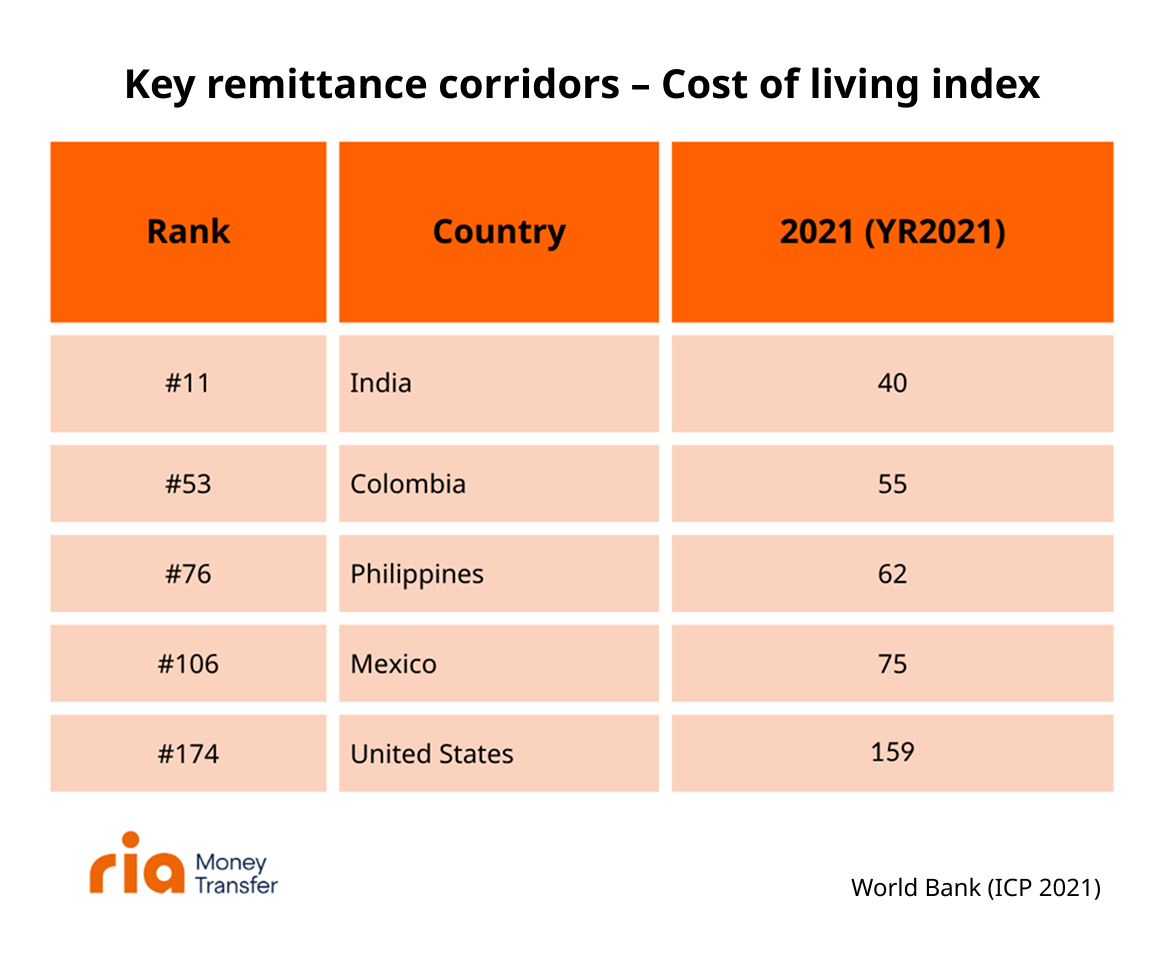
By contrast, countries such as Mexico, Colombia, India, and the Philippines fall below the global average, indicating a lower overall cost of living.
Seeing where these countries sit on the index helps explain why the same amount of money can cover more basic needs in some places than in others.
Understanding the real value of $100
Looking at what $100 can buy across different countries highlights how much the cost of living depends on location, local conditions, and the type of product. Factors such as climate suitability for crops like potatoes or local milk production can help explain these price differences. In some countries, the same amount of money covers more basic needs, while in others it goes much less far.
The data also shows that these differences are not consistent across products. Some items are relatively affordable in the United States, while others allow money to stretch further elsewhere. Understanding both individual prices and overall cost of living is therefore essential to interpreting what money is really worth when it crosses borders.
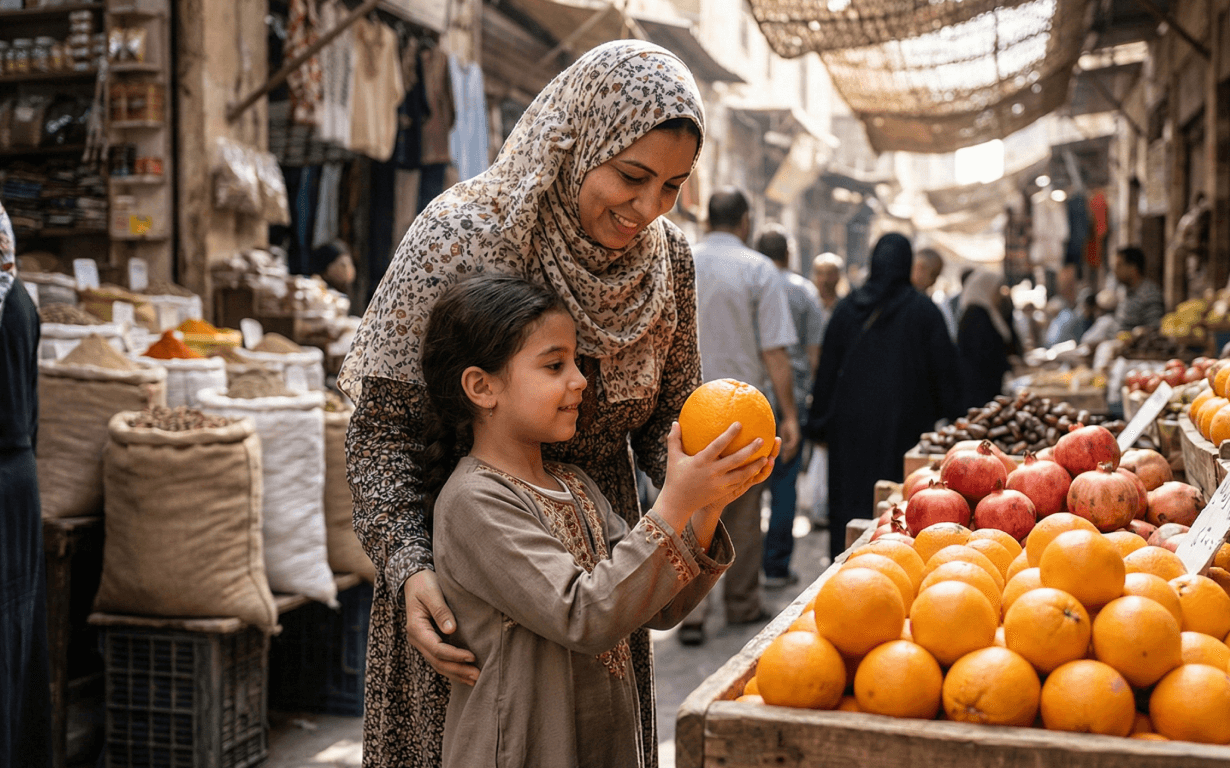
In major remittance corridors from the United States, such as Mexico, Colombia, India, and the Philippines, lower prices for many basic goods mean that money sent from abroad can make a tangible difference in daily life. It is not just about how much money is sent, but what that money can actually do once it arrives.
By focusing on real prices and concrete quantities, this analysis shows in practical terms how the value of money changes from one country to another.
About the author

Gabriela Solis
Gabriela Solis is Ria's Senior Content Writer. Located in Querétaro, México, she focuses on telling stories that show the myriad human faces of remittances.
Related posts
Financial Self-Care for Remittance Senders: Thrive While You Give
Each year, millions of migrant workers send money back home to support their families. These funds have the power to significantly improve the lives of countless households. Even small amounts can make a big difference, helping cover basic expenses and paving the way for a better future. Sending money home is a powerful act of []

How to Prepare for Retirement: Smart Tips for a Comfortable Future
Depending on where you are in your career and in life, retirement may seem like a distant dream or an approaching reality. How much money do you need to retire comfortably? What are the different types of retirement plans? No matter your age or income level, to prepare for retirement is one of the most []
How to Send Money Without a Bank Account
Transferring money is an essential part of modern life, but not everyone has access to a traditional bank account. Sending funds quickly and securely can feel like a challenge without a bank. But here’s the good news: there are reliable alternatives. Why People Might Not Have Bank Accounts To understand how to send money without []
Everyday Financial Literacy Tips that You Can Follow
Money touches every aspect of our lives— from the way we plan our daily expenses to the dreams we hope to achieve in the future. Yet, many people feel overwhelmed when it comes to managing their finances. The good news is that you can master and effectively use various financial skills and concepts by gaining []