)
)
The back-home budget: What remittances support first
)
)
For many people living far from their home country, sending money is a way to stay present and support the people they care about most, even from a distance.
At Ria Money Transfer, we see every day how that support crosses borders. That’s why in this study we analyze what happens to that money once it reaches home and how important it is during difficult times.
In this study, we focus on three of the main destinations for remittances sent from the United States: Mexico, India, and Colombia. Using official data and online search behavior, we explore the impact of money transfers and how they become even more important when families need them most.
Economic context: The weight of remittances in GDP
Before looking at how the money is used, it’s important to understand its economic significance. In the three countries analyzed, remittances represent a meaningful share of the national economy:
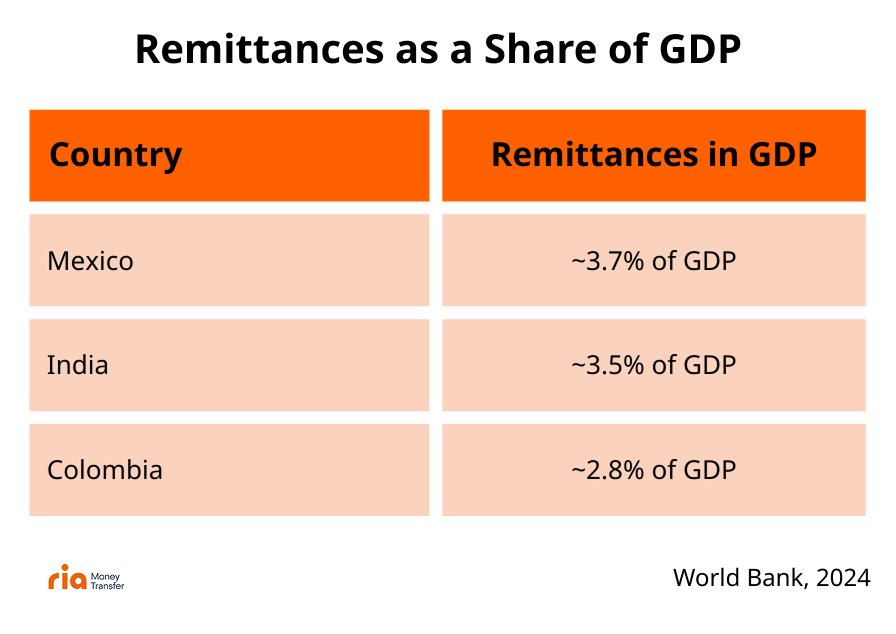
At first glance, these percentages may seem small. But when we’re talking about a country’s GDP, even a fraction of a percentage represents billions of dollars.
This means remittances are not occasional or marginal. They carry real economic weight and are part of the financial lives for millions of families.
What families support first: Main spending categories
There is no exact percentage that shows how much goes to each category. However, reports from the World Bank, the Federal Reserve Bank of Dallas, and the CSIS point to a clear pattern: when families receive remittances, the money is primarily used to cover basic household needs.
In practice, remittances become part of the family budget and are mainly directed toward:
Basic household consumption
Everyday needs such as food, essential goods, and routine expenses. This helps ensure that basic necessities are met and brings immediate stability to daily life.
Health
Doctor visits, medical treatments, medications, and unexpected health-related expenses that can seriously strain a household budget.
Education
Help to cover tuition and other items like school supplies, training, supporting continued education, and future educational opportunities.
Housing
Small repairs, larger improvements, and help to maintain and upgrade housing conditions, directly affecting quality of life.
Household financial stability
Beyond covering immediate expenses, remittances also strengthen financial security and reduce vulnerability during unexpected or difficult times.
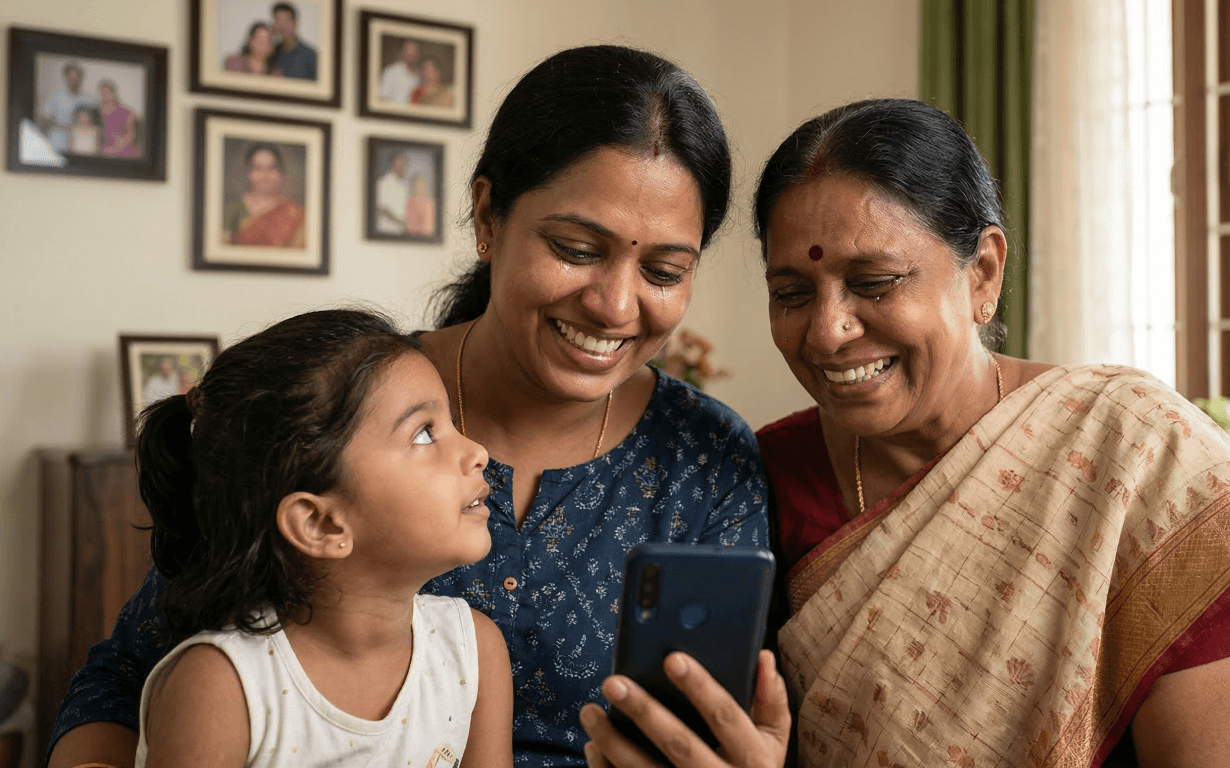
Remittances are not sent for luxury spending. They are sent for what truly matters: keeping the household running, supporting the family, and providing a greater sense of stability.
When support becomes urgent: Moments of greater need
Family support is ongoing, but there are moments when that support increases. To better understand when this happens, we analyzed Google searches in the United States for phrases such as:
“send money to Mexico”
“send money to India”
“send money to Colombia”
Under normal conditions, search interest remains relatively steady. This reflects the fact that many people send money regularly. However, in 2025, clear spikes appear that align with extreme weather events.
Mexico: Flooding (November 2025)
In mid-November 2025, searches for “send money to Mexico” reached their highest point, coinciding with severe flooding in the country. That shows us that when housing, food, or household stability are affected, sending money becomes more urgent.
India: Monsoon impacts (October–November 2025)
In India, two significant spikes appear in October and November 2025, aligning with severe monsoon-related weather events. The pattern is clear: when a crisis directly impacts households, remittances serve as a rapid response mechanism.
Colombia: Climate-related emergencies (November 2025)
In Colombia, a sharp increase in November 2025 coincides with flooding and climate-related emergencies.
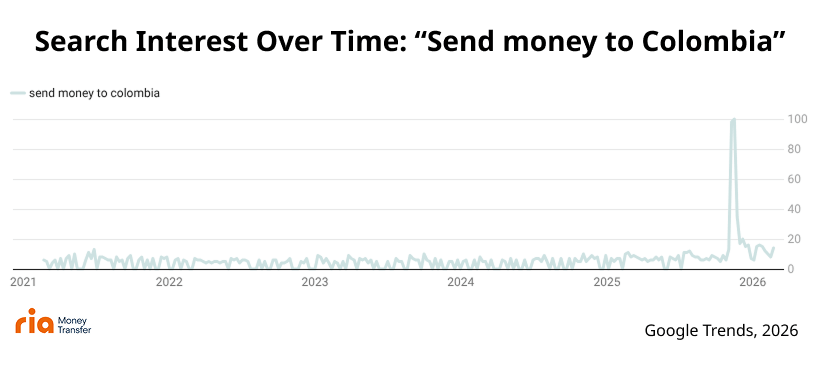
The same pattern appears across all three countries: support is constant, but it intensifies when families face serious disruptions. And this is where the importance of sending money across borders becomes even more clear: remittances don’t just sustain daily life; they also become a real safety net when it matters most.
Faster support: The role of digitalization
The way money is sent has also changed.
More and more people are using digital channels and remote options to complete their transfers. This reduces friction, saves time, and allows funds to arrive more quickly.
And when there is an emergency, speed matters.
If a family is facing flooding, a health issue, or a sudden loss of income, they can’t afford to wait. They need immediate support.
Digitalization makes it possible to send money almost in real time, making remittances more agile and accessible when they are needed most.
Because it’s not only about how much money is sent. It’s also about when it arrives – and how quickly it can make a difference.

A budget that crosses borders
Remittances are an essential part of the “back-home budget.”
They sustain everyday expenses, provide stability, and become even more important when families go through difficult times.
In Mexico, India, and Colombia, their economic weight shows that these are not isolated transfers. They are a steady source of support woven into the lives of millions of households.
But beyond the data, every transfer carries meaning. Behind each one is a decision rooted in care, responsibility, and connection to loved ones far away.
At Ria Money Transfer, we see first-hand how these financial connections help families stay close and support one another, even from thousands of miles apart.
Because when money crosses borders, support does too. And making that support possible means being there when it matters most.
About the author
)
Gabriela Solis
Gabriela Solis is Ria's Senior Content Writer. Located in Querétaro, México, she focuses on telling stories that show the myriad human faces of remittances.
Related posts
)
)
Why Migrants Send Money: The Emotional Side of Remittances
Sending money home is about more than financial support. Explore the pride, love, responsibility and pressure behind remittances and what they mean for migrants.
)
)
How to send money on WhatsApp with Ria: Your complete guide
Everything you need to send money with Ria on WhatsApp: what to have ready, transfer limits, payment, delivery options and how the chat works from start to finish.
)
)
What is Bre-B and how does it work?
Bre-B is Colombia's instant payment system. Learn how llaves work, what Bre-B costs, its transfer limits, and how to send money to a Bre-B key from abroad with Ria.
)
)
The Money That Moves the World Is Personal
200 million people built one of the world's most powerful financial systems, but few call it that.