)
)
How to Build a Monthly Money-Sending Routine
)
)
When your loved ones receive the money you send each month, it brings peace of mind on both sides: they can cover everyday needs, and you know your hard-earned money is making a real difference.
But without a plan, it can slip into last-minute stress, surprise costs, or missed transfers altogether.
The good news? With a simple routine, sending money can feel steady, manageable, and fully in your control.
Here’s how to build a monthly money-sending routine that works for you.
Why a routine matters
If you send money regularly, you’ve probably experienced at least one of these:
▪ Forgetting to send money until it’s urgent
▪ Sending more than planned
▪ Feeling pressure during tight months
▪ Relying on emergency transfers
A routine helps you:
▪ Stay consistent
▪ Plan your budget better
▪ Reduce financial stress
▪ Support your loved ones more reliably

Step 1: Know who you’re sending to (and why)
Start by getting clear on your priorities:
▪ Who do I send money to each month?
▪ What is this money used for? (rent, groceries, school, healthcare)
This clarity helps you treat money transfers as part of your essential monthly expenses, not an afterthought.

Step 2: Set a schedule you can stick to
Consistency is everything. Choose a timing that aligns with your income:
▪ Right after payday
▪ Before rent is due
▪ Split into two smaller sends per month
The key is making it predictable for you and your family.
Step 3: Define your typical amount
Instead of guessing every month, set a baseline.
For example:
▪ I usually send $200 monthly.
▪ I send $100 twice a month.
You can always adjust, but having a default removes decision fatigue.

Step 4: Plan for both expected and unexpected sends
Not all transfers are equal. Break them into two categories:
▪ Planned sends → your regular monthly support
▪ Emergency sends → medical needs, urgent bills, etc.
Pro tip: If possible, set aside a small “just in case” fund to avoid disrupting your budget.
Step 5: Use reminders so you don’t have to think about it
Life gets busy. Automating your memory helps. Set simple reminders like:
▪ Before payday
▪ A few days before rent is due back home
▪ Monthly calendar alerts
Or better yet: build it into your routine the same way you do bills.

Step 6: Track and adjust monthly
Take 5 minutes at the end of each month to review:
▪ Did I send what I planned?
▪ Did any emergencies come up?
▪ Do I need to adjust next month’s amount?
Small tweaks make a big difference over time.
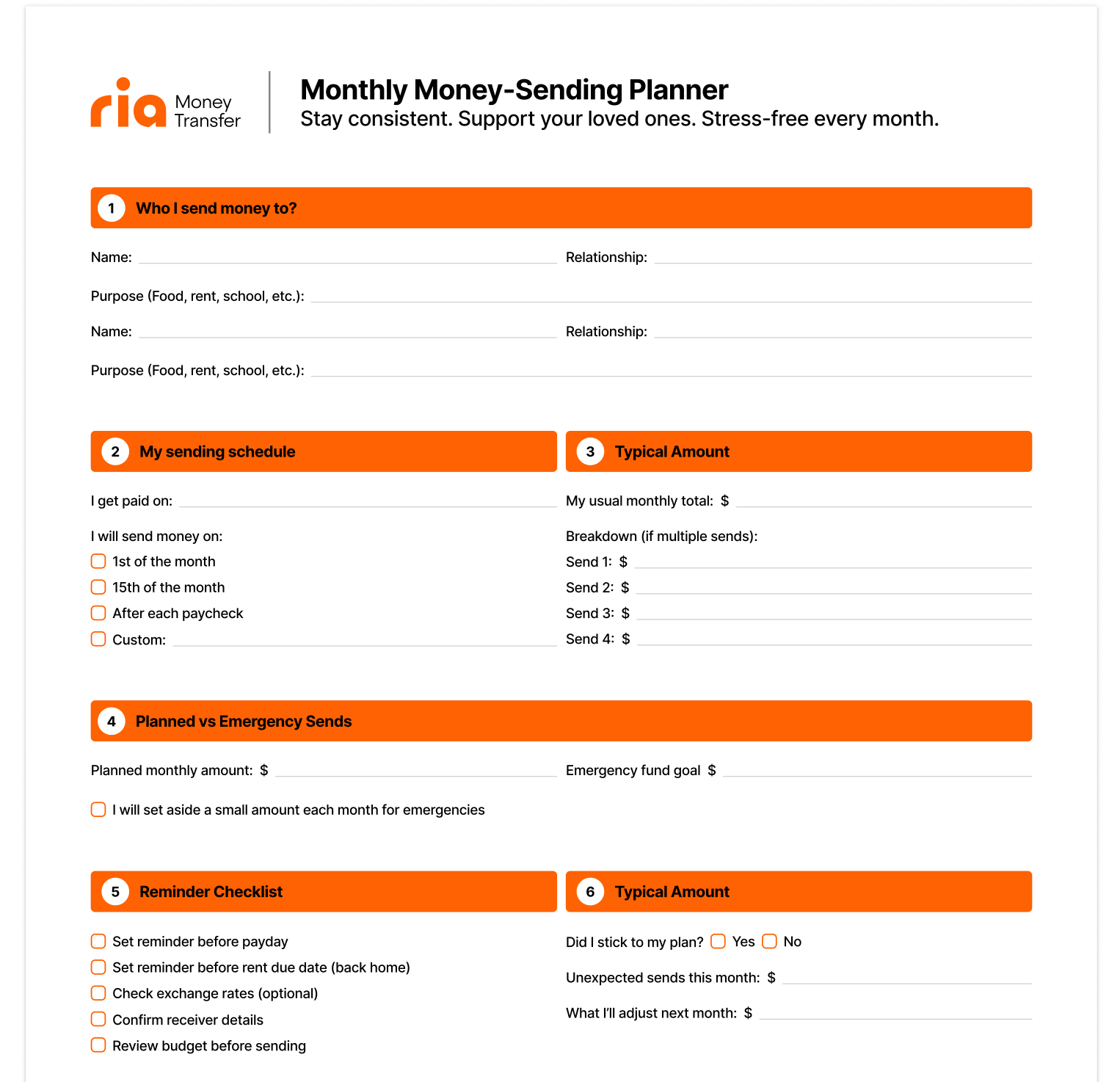
Make it easier: use a Monthly Money-Sending Planner
If you want a simple way to stay organized, we’ve created a free checklist you can use every month.
Download it, save it, reuse it, and make your routine stress-free.
About the author

Gabriela Solis
Gabriela Solis is Ria's Senior Content Writer. Located in Querétaro, México, she focuses on telling stories that show the myriad human faces of remittances.
Related posts

How to send money on WhatsApp with Ria: Your complete guide
Everything you need to send money with Ria on WhatsApp: what to have ready, transfer limits, payment, delivery options and how the chat works from start to finish.

What is Bre-B and how does it work?
Bre-B is Colombia's instant payment system. Learn how llaves work, what Bre-B costs, its transfer limits, and how to send money to a Bre-B key from abroad with Ria.

The Money That Moves the World Is Personal
200 million people built one of the world's most powerful financial systems, but few call it that.

Colombia Earthquake (2026): How to Help, Find Relief Resources, and Send Money
On the morning of August 10th, a 7.4-magnitude earthquake struck western Colombia. Ria is waiving transfer fees to Colombia through August 16.