)
)
A Brief History of Migration and Remittances in India
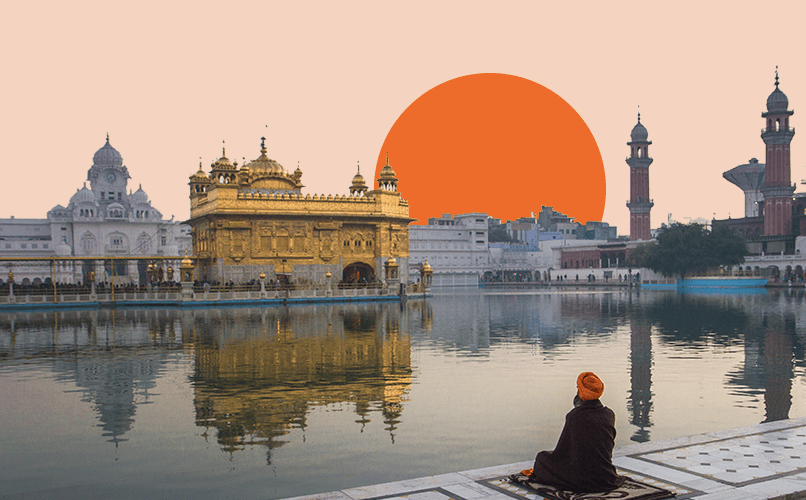
Did you know indoor plumbing was invented in the Indus Valley?
This invention, along with many infrastructural changes first implemented in Indian metropolises, allowed civilizations to flourish over millennia in the Indian subcontinent. The result has been nothing short of outstanding, with present-day India possessing the second-largest population in the world despite ranking eight in extension.
Thanks to its long and widespread history, India’s cultural heritage is impressively varied. Currently, there are 22 official languages, with English being considered a subsidiary official language. In honor of India’s Republic Day being celebrated on January 26, we bring you the newest installment in our Brief Histories series. Continue reading to learn all about migration and remittances in India below.
A (Very) Brief History of India
Evidence suggests that the area that corresponds to modern-day India has been inhabited for tens of thousands of years. The great Indus Valley Civilization emerged from these settlements, which were mostly located along the Indus River basin. At its full extension, the Indus Valley Civilization occupied most of present-day Pakistan, Afghanistan, and India. From there, the early roots of Indian culture began to develop, such as Sanskrit language and the beginnings of Hinduism.
From the settlements of the Ganges Basin, the Maurya and Gupta empires developed, empires which had greater contact with other civilizations. After the 10th century, Islam arrived through the north of the Indian plains. This eventually led to the establishment of the Delhi Sultanate and brought even further diversity, culture and scientific developments to the region.
The Mughal Empire, which developed from the 16th century onwards, brought to India other forms of political, cultural and societal organization. By the 18th century, Europeans were already in contact with India through trade (the East India Company being a prominent example). This marked the onset of British rule, bringing further political, social and cultural changes to India. All of these factors and developments eventually led the country to reorganize itself into the India we know today: a democratic and secular republic, one of the largest economies of the global market and, of course, one of the most populous and culturally diverse countries in the world.
Indian migration
India has the highest volume of emigration in the world, with around 17.5 million natives living abroad. According to the Pew Research Center, one out of every twenty migrants worldwide was born in India. Most of Indian expats live in the United Arab Emirates (3.4 million), the United States (2.7 million), and Saudi Arabia (2.4 million) – these three countries account for almost half of all India’s migrants. However, the country doesn’t suffer from a dwindling population as immigrants comprise only 1% of the total.
India is also one of the top destinations for migrants around the world. Based on stats from the Migration Data Portal, India’s international migrant stock equals 5.2 million, 0.4% of the population. Most immigrants come from Bangladesh (3.1 million), Pakistan (1.1 million) and Nepal (533.6 thousand), all of which share a border with India. Sri Lanka comes in fourth place, with approximately 160 thousand immigrants living in India. Thanks to the gender parity found among immigrants, with 48.8% being women, newcomers are likely arriving as part of a family unit.
Remittances in India
The impact of remittances, be it to or from India, cannot be understated. In a single year (2019), India received an estimated US$82.2 billion in remittances equating to 2.8% of the county’s GDP. If this number seems exorbitant, it’s because it is. India is the top-remittance receiving country in the world, a direct result of the high volume of emigration.
In correlation with current migration flocks, in 2017 the highest volume of remittances to India came from the United Arab Emirates (US$13.8 billion), United States (US$11.7 billion), Saudi Arabia (US$11.2 billion), Kuwait (4.5 billion), Qatar (4.1 billion) and the UK (3.9 billion). When it comes to remittances from India to other countries, Bangladesh was the first recipient country: more than US$ 4 billion were sent from India in remittances, followed by Nepal (approximately US$ 1 billion), Sri Lanka (US$ 520 million), China (US$ 41 million) and France (US$ 15 million).
Do you need to send money to your loved ones in India? We’re here for you. Download the lastest version of our app for iOS and Android to get started!
About the author

Gabrielle van Welie
Gabrielle van Welie is Ria's Global Content Manager. Originally from Dominican Republic, she specializes in the cultural impact of remittances and migration across the globe.
Related posts

Living in Japan as a Foreigner: How to Read the Room and Feel at Home
Japan always leaves a strong impression on those who visit the country. Its cities are clean and efficient, public transport is known to be reliable, and everyday life often feels remarkably organized. These factors make it easy to understand why so many people choose moving to Japan as a foreigner: to live, work or study […]

The Currency of Caring: The Human Side of Remittances
Every year on June 16th, the world observes International Day of Family Remittances. On that date, we recognize the millions of migrants who send money back home to support their loved ones, helping build a better future for countless households across the globe. Although there is a lot of data about the financial impact and […]

Sadio Mané and Ria: Empowering the Global Diaspora
Sadio Mané is considered one of the best and most recognizable African footballers of all time. But the Senegalese striker is more than just a global football icon: throughout his career, he’s reinvested his earnings back into his community, bridging the gap between football, migration and financial empowerment. That’s why at Ria we are extremely […]

How Migration Is Redefining National Teams in Global Sport
Modern sport no longer knows bounds. Whether it’s on football pitches, athletics tracks or basketball courts, the movement of people across countries and migration in sports has transformed how national teams are built and what they represent. Global competitions increasingly showcase squads made up of players with diverse cultural backgrounds, reflecting a world where migration […]