)
)
What Are Remittances and Why Do People Send Them?
)
)
Remittances have remained a trending and powerful topic despite the twists and turns of technology and society.
This kind of money transfer, sent by a migrant worker to his or her home country, does more than connect families. Remittances sustain fragile households and economies. As an imperative lifeline, we must ensure it’s always available to those who rely on it.
But first, what are remittances?
The term “remittance” is mostly used in reference to money sent by migrants to relatives and loved ones in their home country. The money earned by these migrant workers living abroad is then spent on their original country, be it in food, healthcare, clothes or education, among other expenses.
The impact of remittances
To understand what remittances are, it is important to consider some numbers: currently, there are 232 million migrant workers in the world who send home more than US$600 billion a year, according to the World Bank. For some 25 developing countries, remittances now constitute over 10% of their GDP. For countries like Haiti, Nepal and Tajikistan, more than 25% of their GDP comes from remittances.
Statistically, developing nations receive three times as much funding through remittances than through foreign aid. At the same time, migrant workers remain active participants within their host economies, contributing as tax payers, filling in gaps in their industries and creating overall demand in the local job market.
Why do people send remittances?
Migrant workers send money home to support their family members, granting them a means to cover their basic needs. At the same time, remittances have a direct impact on health, education and poverty levels, and even help develop infrastructure in communities.
According to the United Nations Development Program (UNDP), children in El Salvador and Sri Lanka coming from remittance-receiving families have a lower school drop-out ratio, even boosting investment in private tuition. In Sri Lanka, these children are even born with a higher birth weight.
Remittances are also used for local investments and to support small entrepreneurs. They help pay off loans and restore credit. However, there’s one overarching benefit: remittances allow for families to regain their financial autonomy, making their future payments a matter of choice, and not obligation.
What are remittance channels?
There are two basic types of remittance channels: formal and informal remittances. To put it simply, formal remittances are the ones that are sent and received with the available and official channels in every country (such as the aforementioned electronic payments, carried out through banks and financial institutions). On the other hand, informal remittances are the ones carried out through every other channel outside of the formal ones – such as agents that carry the money physically.
Before money transfer operators stepped into the scene, migrant workers relied on informal channels, such as travelers that would send money back to their loved ones. Migrants would prepare small packets of cash and attach letters detailing for who and for what the money was for. Then, they would find a traveler or remittance carrier. It could be a friend, a neighbor or an informal agent.
Now, thanks to money transfer operators, we live in an age where moving money is easier than ever, putting the informal remittance market into perspective. For the global community, whatever happens with remittances is important.
Formal vs. informal remittance channels
Although it is still common practice to send remittances through informal channels, it does have its drawbacks. It is true that these informal agents might be doing the job for free, especially if they simply happen to be visiting their families and have easy access to your parents’ house. However, there is a lot at stake. With informal channels, there is no guarantee that the funds will be delivered as money can be easily lost or the sender could even get robbed.
Or what about the countless scams that go unregistered and are untraceable? And that’s saying nothing about when you need to send money urgently, when it just can’t wait until next month’s trip.
That is why it is critical to offer affordable and accessible formal types of remittance and money transfer services. As we’ve discussed, migrant workers help their families and improve the economy of whole communities and nations when they send money. This is why it’s imperative to offer them better options when it comes to remittances.
Where Ria Money Transfer comes in
A good money transfer service is one in which senders can benefit from the speed and security they need for a low cost. The sender is sure the money will reach its destination and that his or her beneficiaries can have the money within minutes.
Encouraging competition and opening up markets are ways in which governments and businesses can help money transfer operators offer an even better service and price. Even if a migrant worker still decides to go with informal channels, the option should still be available to them.
Ria Money Transfer aims to be the link between migrant workers and their loved ones. We work hard to ensure migrant workers can reach their family members anywhere within our networks, which includes over 165 countries and 510,000 locations. Our goal is to reach every corner of the world, no matter how remote, so we can be there for those who need it most.
Ready to send money overseas to your loved ones? We’re here for you. Download the latest version of our app for iOS or Android to get started.
About the author

Gabrielle van Welie
Gabrielle van Welie is Ria's Global Content Manager. Originally from Dominican Republic, she specializes in the cultural impact of remittances and migration across the globe.
Related posts

What is Bre-B and how does it work?
Bre-B is Colombia's instant payment system. Learn how llaves work, what Bre-B costs, its transfer limits, and how to send money to a Bre-B key from abroad with Ria.

The Money That Moves the World Is Personal
200 million people built one of the world's most powerful financial systems, but few call it that.
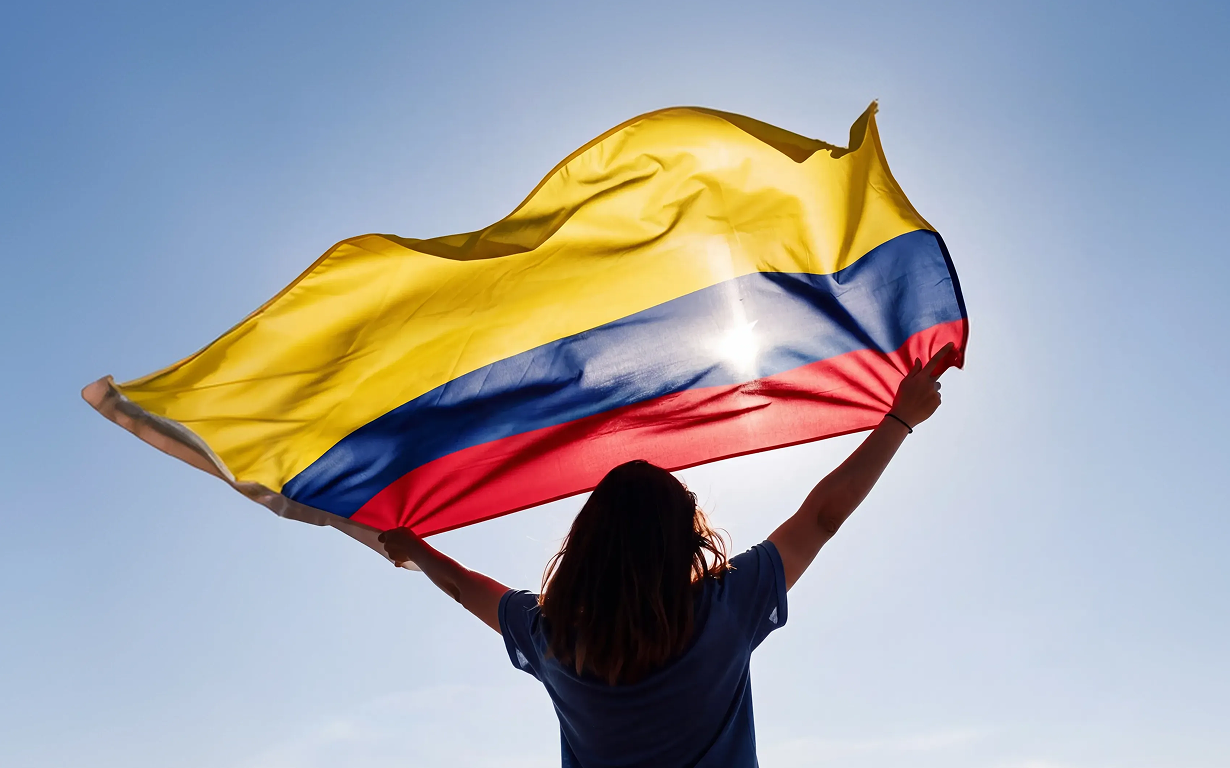
Colombia Earthquake (2026): How to Help, Find Relief Resources, and Send Money
On the morning of August 10th, a 7.4-magnitude earthquake struck western Colombia. Ria is waiving transfer fees to Colombia through August 16.

Venezuela Earthquake (2026): How to Help, Find Relief Resources, and Send Money
Many of our customers have loved ones in Venezuela. If that's you, we're thinking of you. Here's what you need to know: Information is based on updates from USGS, UN OCHA, IFRC, and other humanitarian organizations. Details may change as emergency response efforts continue. On the evening of June 24, two powerful earthquakes struck Venezuela.